

The crab crumpet
And why I didn't want it on the menu

Welcome back to Like a Chef; lifting the lid on restaurant cooking for you at home.
This week it’s all about one of the most elite baked goods going: the crumpet. The vast majority of people have only had them out of a packet, but to have them straight out of the pan is a whole other ball game. We’ll show you how to make them great, why having them in the restaurant nearly killed us, and what to top it with to send your menu into another stratosphere.
Subscribe to read this, all future and past posts, and to receive insider scoops on the Fallow group.
Thanks for joining us,
Jack & Will
Jack and I have been really lucky with some brilliant head chefs who have helped steer the Fallow ship while we’ve taken to growing the business. I’ll be honest, the idea of letting someone else have that level of creative ownership of something you’ve toiled over is a scary thing, but taking that step has been fundamental to where Fallow is today. One of those brilliant head chefs was Fergus Wilford. Fergus had been lobbying Jack and I for a while to get a crumpet on the menu.
A crumpet had featured on our original menu from our first pop up. A fresh, bouncy crumpet served with brown shrimp and admiral sauce; a historical sauce rich with brown butter and sherry vinegar. It was inspired by a pollock dish at Dinner by Heston Blumenthal which had a similar sauce, and it turned out to be one of my favourite dishes that we served at the pop up.
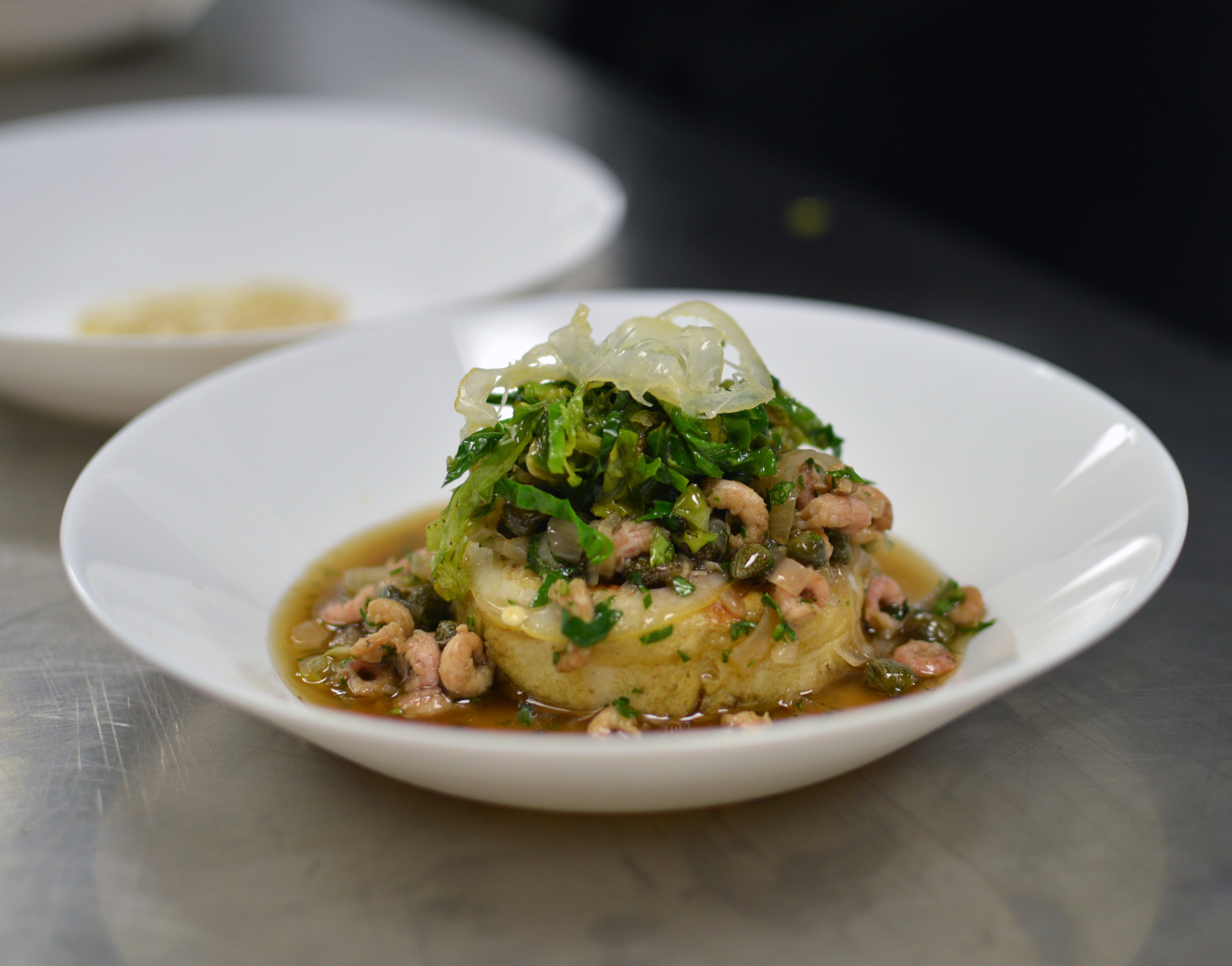
But when Fergus turned up and said he wanted to resurrect the crumpet - I had my reservations. As delicious as it had been in our pop up days, I thought that it was going to be a nightmare to keep up with at scale. As it turned out, I was right.
The thing about cooking for 10 and cooking for 1000 is that it’s not just your own capability and organisation as a cook that needs to evolve, but that the very recipe itself may well not hold up. It is one of the most frustrating things of running a restaurant and something that our development chefs are all too familiar with. In the early days of development you will be creating something in small portions, getting the flavour and the concept bang on. But what needs to be factored in is that once scaled up, you will almost definitely need to revisit the recipe, adjusting it (and sometimes ripping it up and starting again) so that it works in those numbers.
Crumpets are a perfect example.
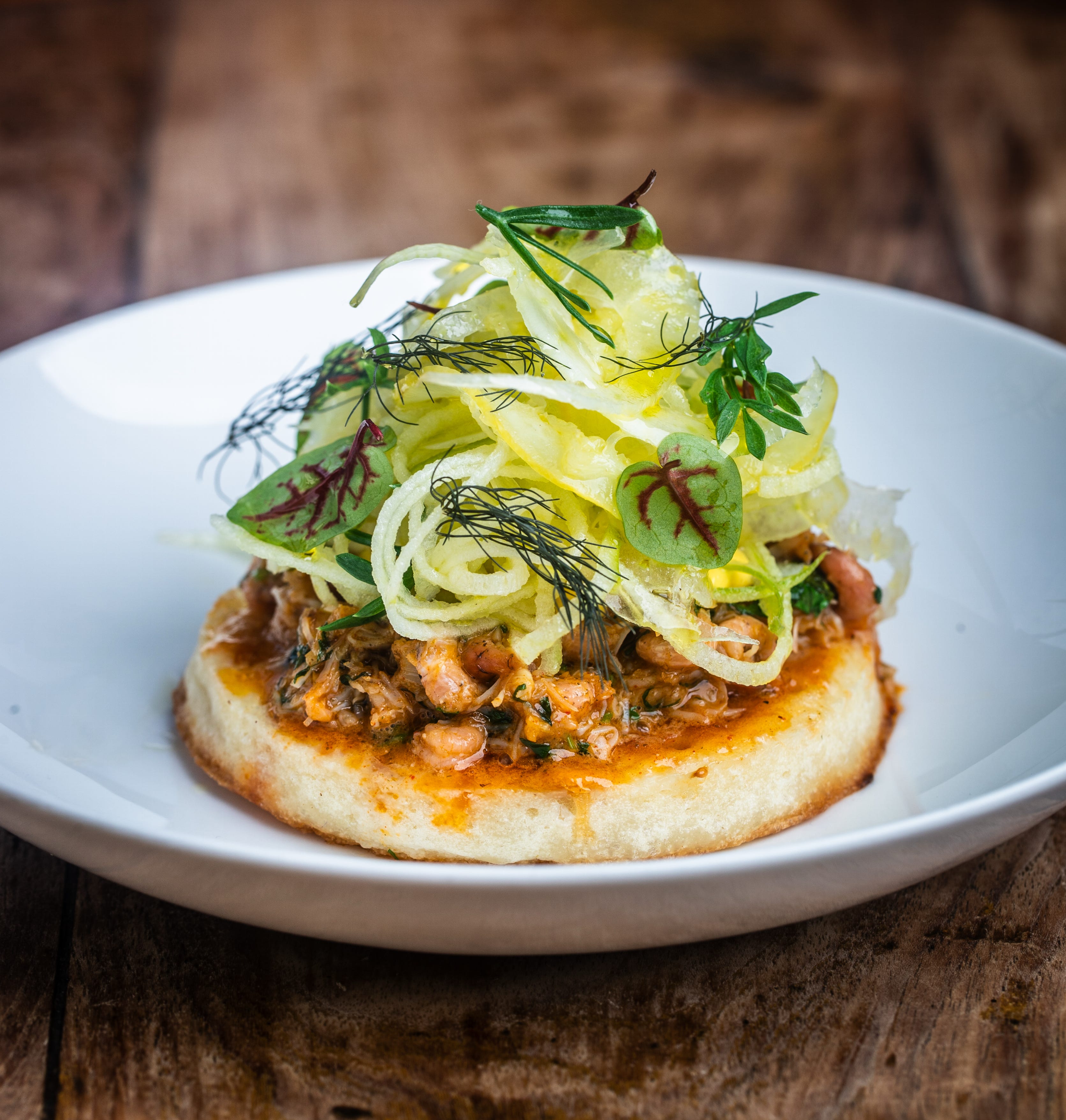
Still, we cast off our reservations and worked with Fergus to create a beautiful crab crumpet for the Fallow menu. Crisp bottomed, light and springy middle, and the quintessential hole-riddled top to signify a gorgeous crumpet. We made a knockout butter, infused with roasted crab shell and whipped up with mace, smoked paprika, cayenne and kombu. We’d toss the butter through a mix of fresh crab, potted shrimps, pickled lemon, pickled shallots and finely chopped soft herbs. They’d get heaped onto the crumpet along with a bright apple and fennel salad dressed in a simple lemon vinaigrette. Sat on the plate you’d see the deep orange butter dripping through the crumpet as a signal that something very, very good was about to happen.
It’s probably little surprise that as soon as it hit the menu, the crumpet was incredibly popular. And turning out 60 crumpets a day of that quality? Well, we well and truly got knocked off our feet.
At first we were tripling the recipe to make sure we were keeping up with demand.
But it just wasn’t working. At best, your first 20 crumpets would be perfect, but you’d soon find that in the time it took you to fry up your first 20, the other 40 would be over-proved and you’d end up with bubble-less ‘crumpets’ which did nothing but serve as a way to keep some hungry chefs going at the 9pm slump.
The kitchen was rife with variables. We’d try to refine the recipe so that it was as robust as possible, but making the crumpets on a day when all the ovens were on and the kitchen was swelteringly hot versus a day heavy on butchery where the ovens were free, it was just a totally different thing and would result in a totally different reaction from the yeast. Even the pans themselves would have different hot spots, so one crumpet would come out golden and bubbly and the other flat and burnt.
Sometimes you’d come in to look at your batter and you wouldn’t even have to fry up your first crumpet to know that it was a dud and you had to start again.
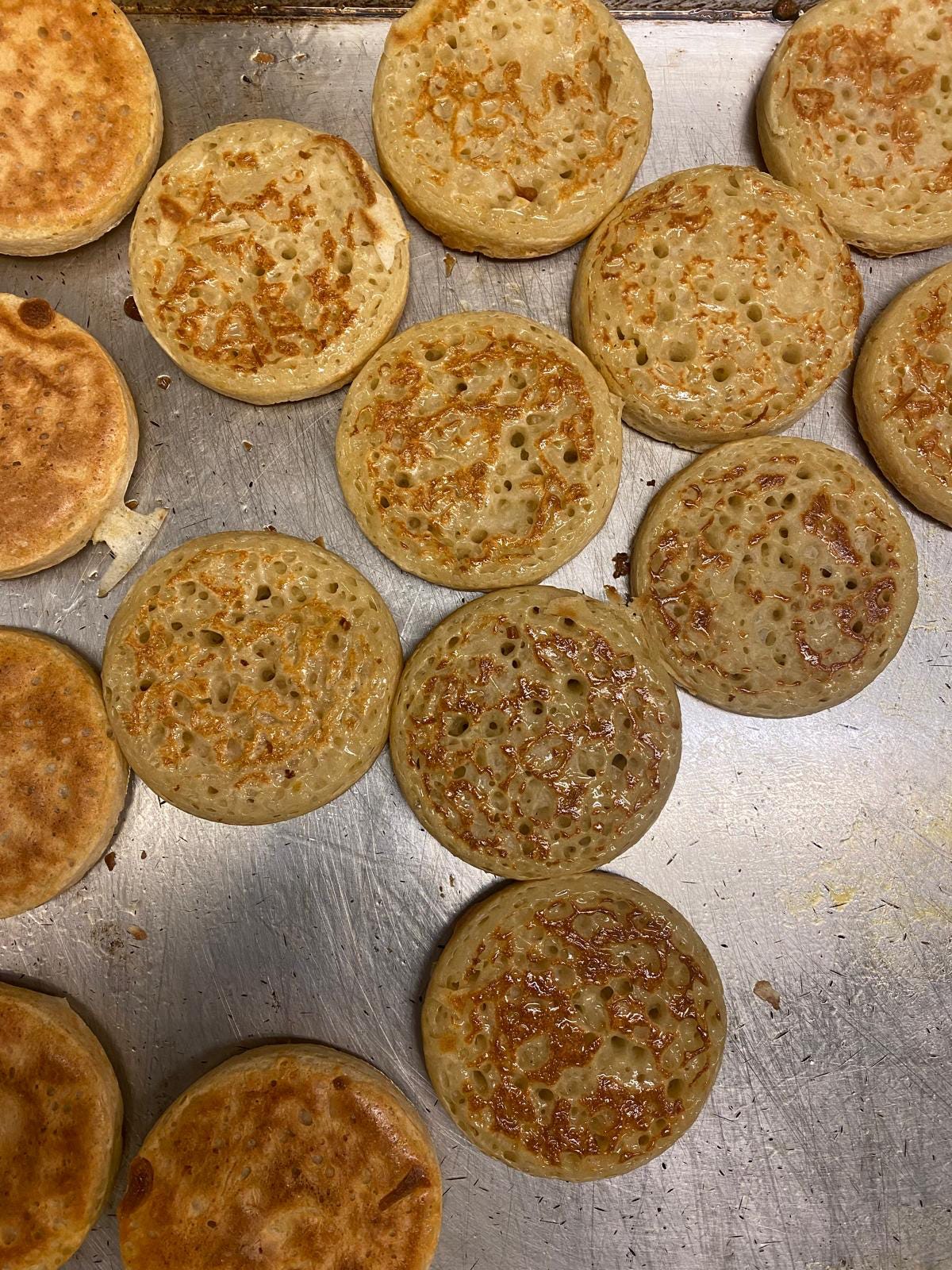
It was only after a frankly depressing number of binned crumpets (binned/snaffled up by the chefs) that we hit on something of a eureka moment. And that eureka moment came in the form of the iVario Rational. A brutally expensive bit of kit - it’s effectively a giant pan which is characterised by its ability to sustain the same temperature across the bottom. Where pans wouldn’t heat evenly and could hold 6 crumpets at most, the iVario meant we could smash through 20 crumpets at a time on a perfectly consistent surface.
That was the expensive fix. The less expensive fix? The bar prep area. Round the corner from the prep kitchen, the bar prep area had one key thing going for it: it had zero heat sources. No oven, no inductions, and only big enough for one, maybe two people. It was the perfect home for letting our batter activate and it was a far cry more consistent than the kitchen.
You might ask why we endured so much failure in pursuit of a method that worked. Why not just buy in excellent crumpets and focus on what went with it? It was a selfless act, but it was worth it.
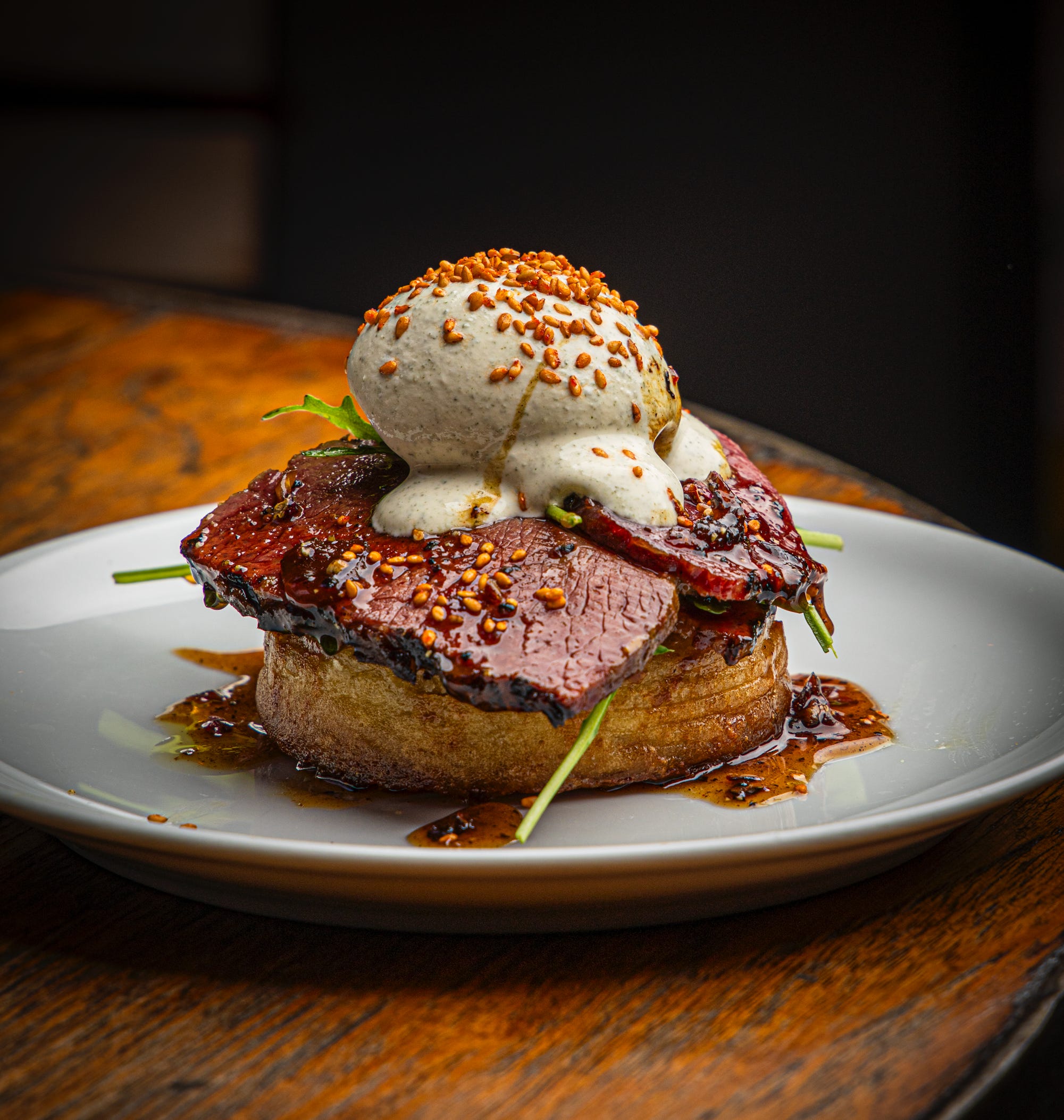
A homemade crumpet straight out of the pan is in an entirely different league to one that comes out of a packet. The latter has its place - I’ve consumed them with great joy on many occasions - but straight out of the pan it has this perfect mix of a crisp bottom, caramelised with the light sheen of a little oil, and a pillowy soft top.
Not to mention that it soaks up even more liquid when it’s fresh, making it the most naturally occurring leavened flavour sponge going.
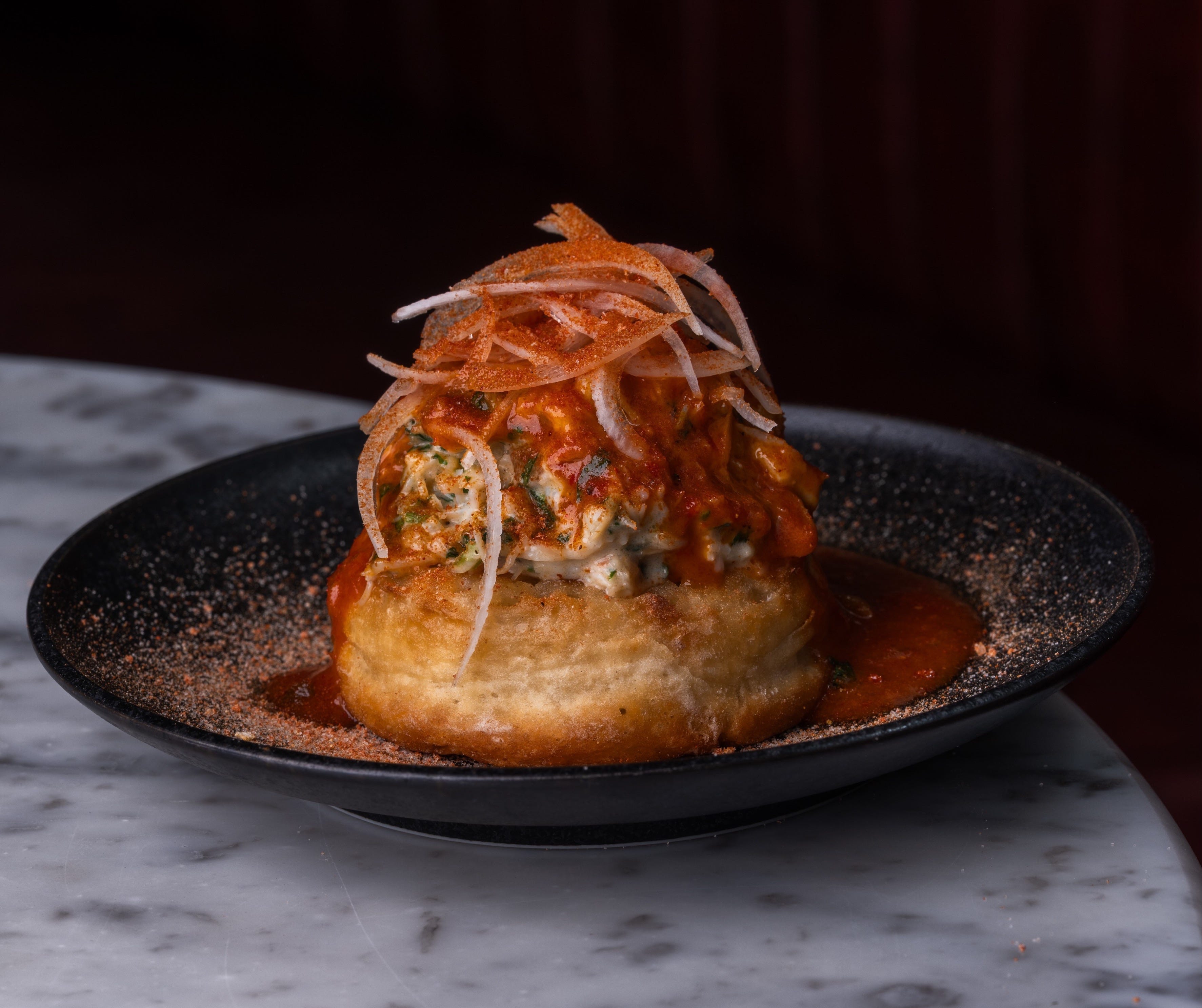
So maybe we’re gluttons for punishment, but when we started to develop the menu at FOWL it was only right that we gave it its own crumpet moment.
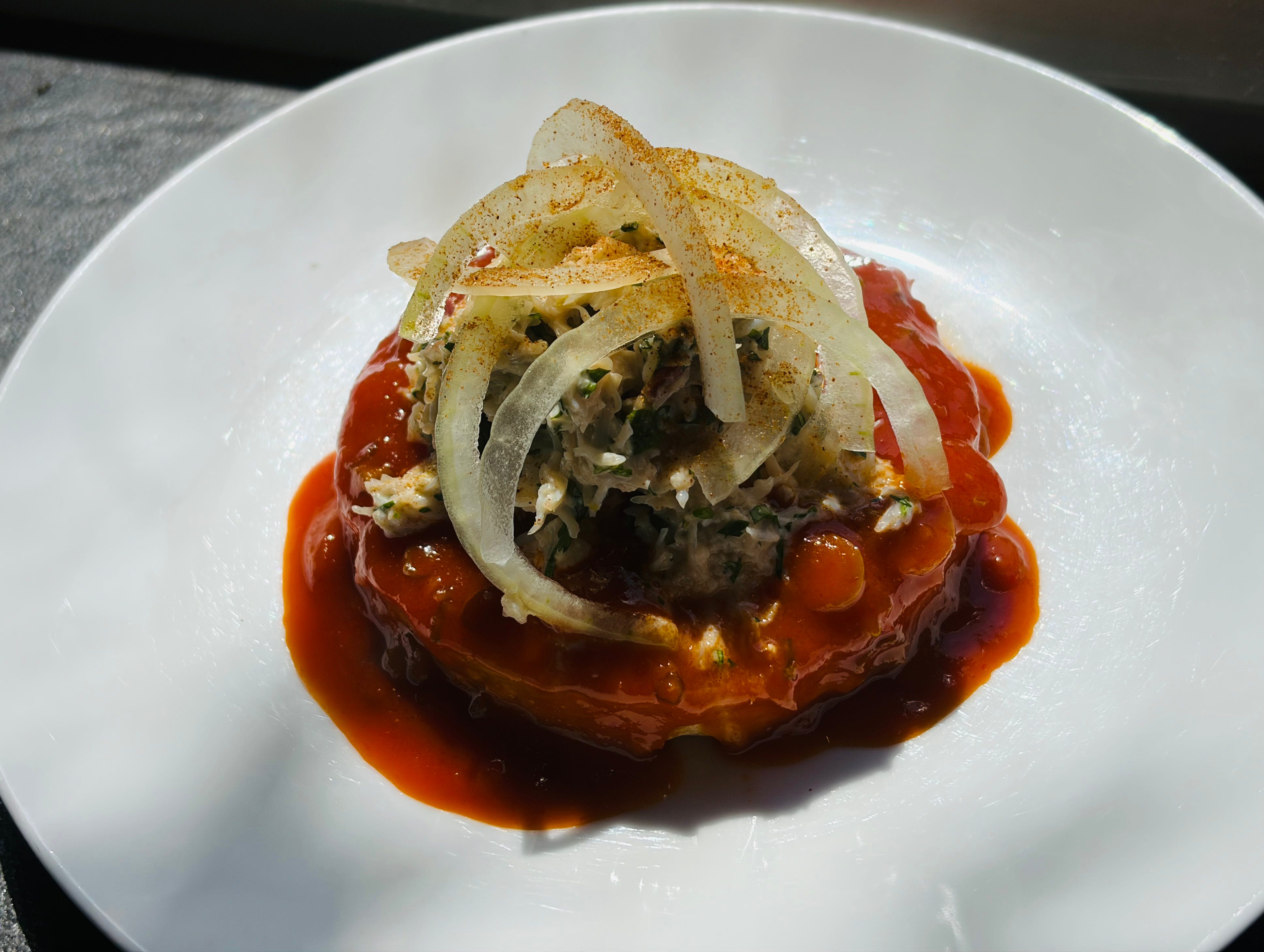
True to the American Korean influences that flow throughout FOWL, we decided to head in the direction of a sweet and spicy bang bang sauce.
Really intense with gochujang, gochugaru and toasted sesame oil, the sauce gets acquainted with fresh picked meaty white crab and topped with finely sliced, iced, raw white onion and fermented tomato seasoning.
A bloody gorgeous evolution of the Fallow crumpet and one that is dangerously easy to produce at home.

THE BATTER
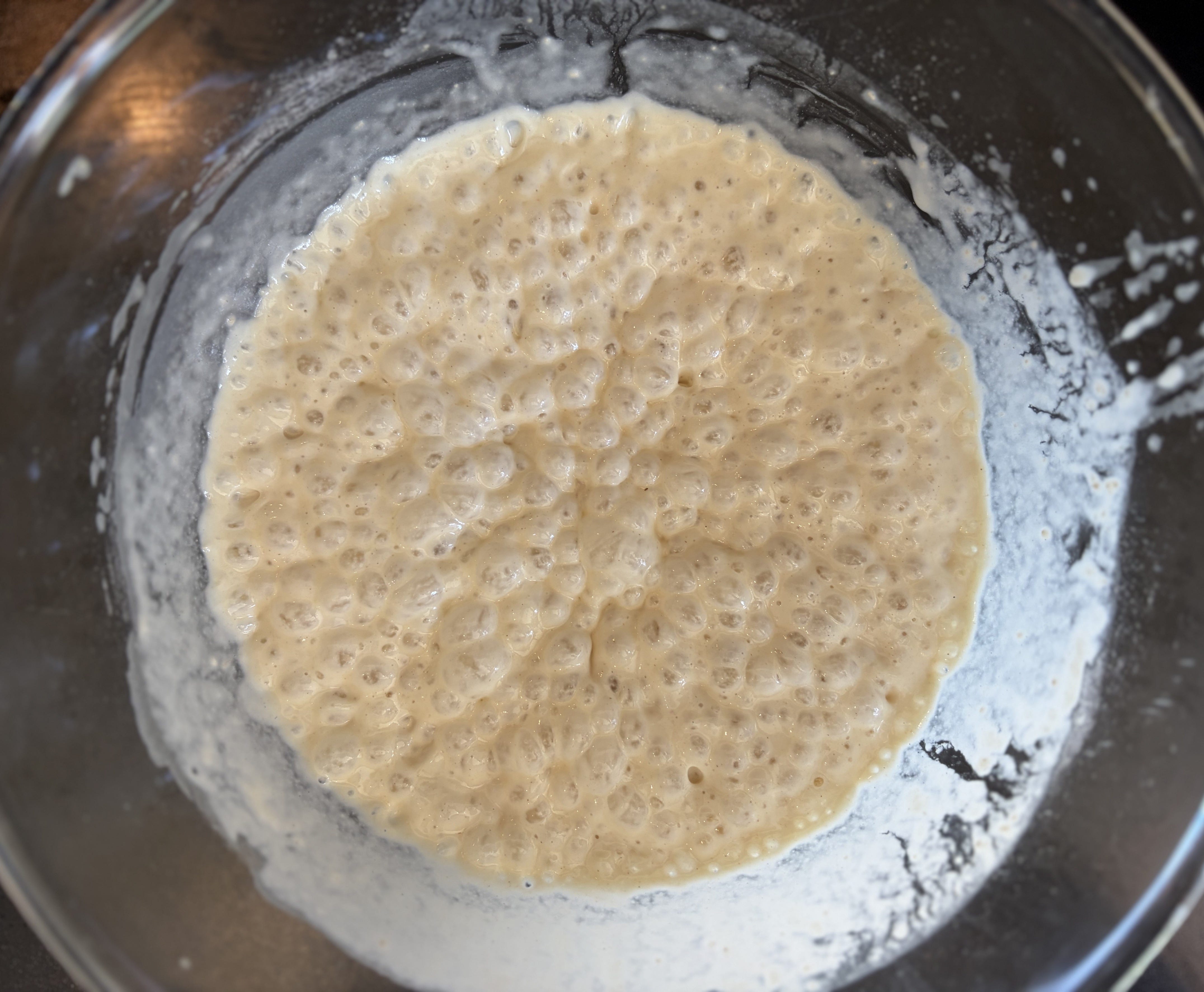
Crumpet batter has a thickness that sits somewhere between that of bread and crêpes, and it’s what dictates how easily the air bubbles rise through the batter.
These air bubbles, created by the fermentation of yeast, are what give us the bouncy texture that we’re looking for from a good crumpet. The thickness of the batter is our first opportunity to create an atmosphere for them to slowly rise to the top and leave behind their trademark holes. Too thick and the bubbles won’t be able to make their way through. Too thin and they will escape and pop too fast, with the thin batter covering over any traces.
Adjust your batter till it reaches a viscosity slightly thicker than that of double cream and you’ll be on your way.
THE GLUTEN
Once again, crumpets ask us to tread the fine line between pancake and bread when it comes to gluten development.
When mixed, flour and water create a web of proteins (glutenin and gliadin). Properly developing your gluten gives that web structural integrity, allowing your air bubbles to climb up and out the batter. Without proper gluten formation, the crumpet will be more cakey than spongey with bubbles that escape right out of the pan. Too much and you’ll find yourself in the territory of chewy bread, with a structure that is too firm for the relative pressure of the air bubbles to be able to climb through.
Every crumpet connoisseur will have an opinion on which flour is the right one to achieve the gluten sweet spot. For us, we’ve found plain flour plus some elbow grease in the form of a vigorous mixing is perfect.
THE HEAT
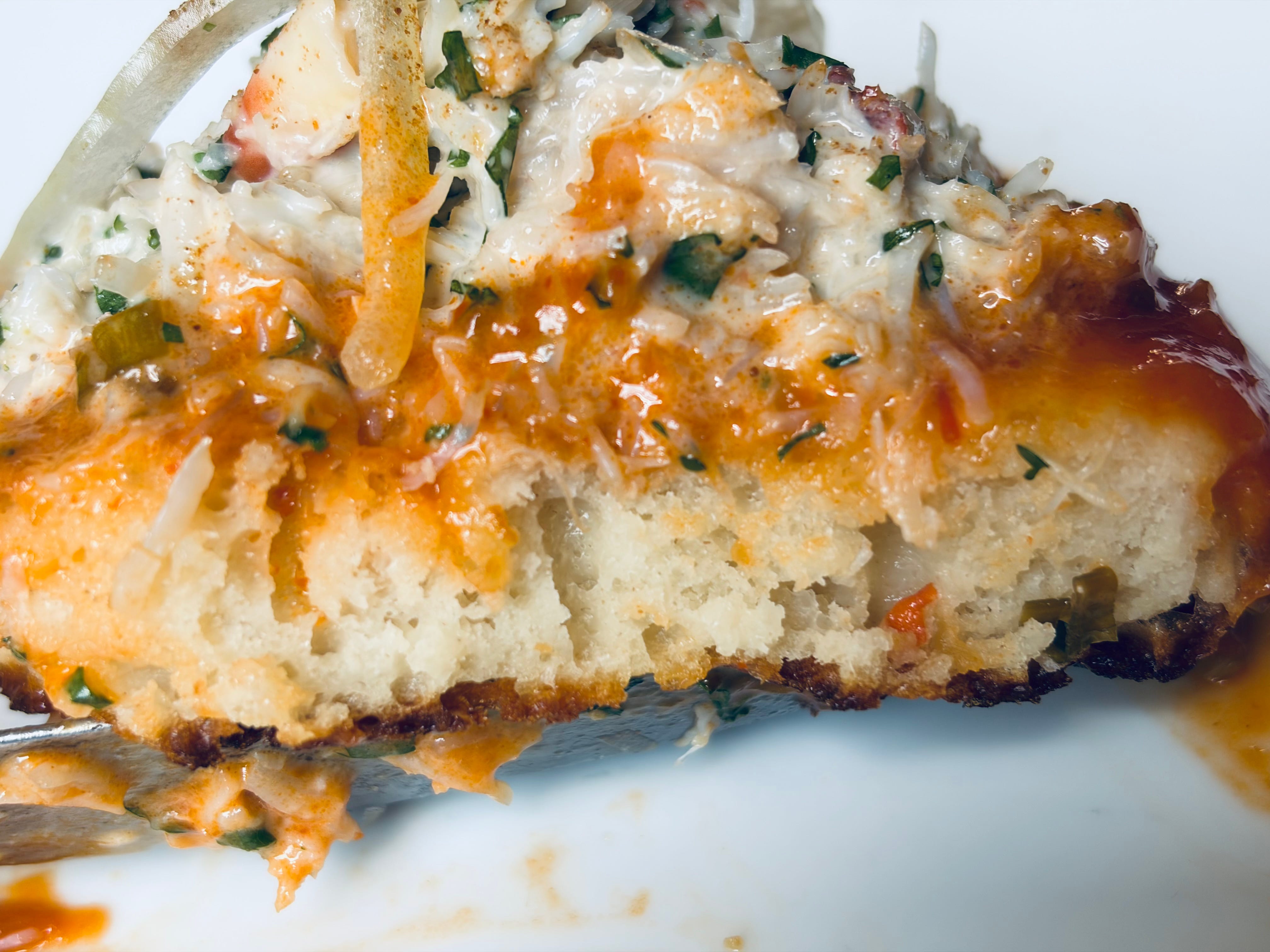
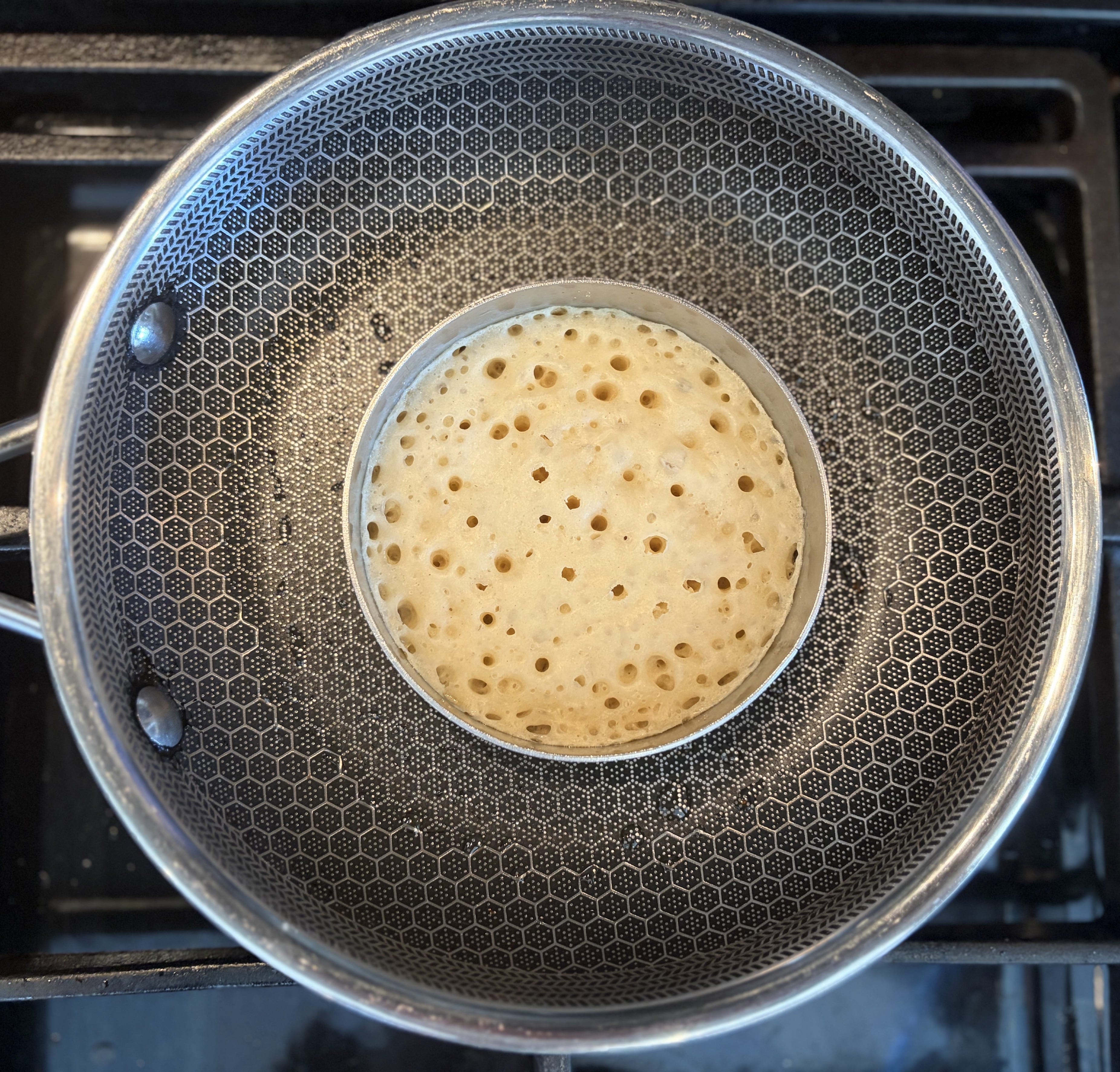
Heat is fundamental in creating the ‘chimney effect’ - the effect responsible for crumpets’ defining honeycomb structure.
The initial heat of the pan is our opportunity to make the most of thermal expansion - essentially getting our raising agents to react with the heat and create an instant lift. And while this takes place, the water in the bottom layer of batter turns to steam, helping shoot gas bubbles up to the surface and leaving behind tubular tunnels or ‘chimneys’ which separate a crumpet from a muffin.
Don’t get overexcited - too much heat and you’ll find that the bottom of your crumpet burns before the middle has has the chance to cook through. Getting your pan nice and hot and then turning it down just as you’re ladling in your batter is a good way to experience the best of both worlds: the initial heat being strong enough to push the bubbles to the top, while the lower setting gives the crumpet the time it needs to properly cook.
THE OIL
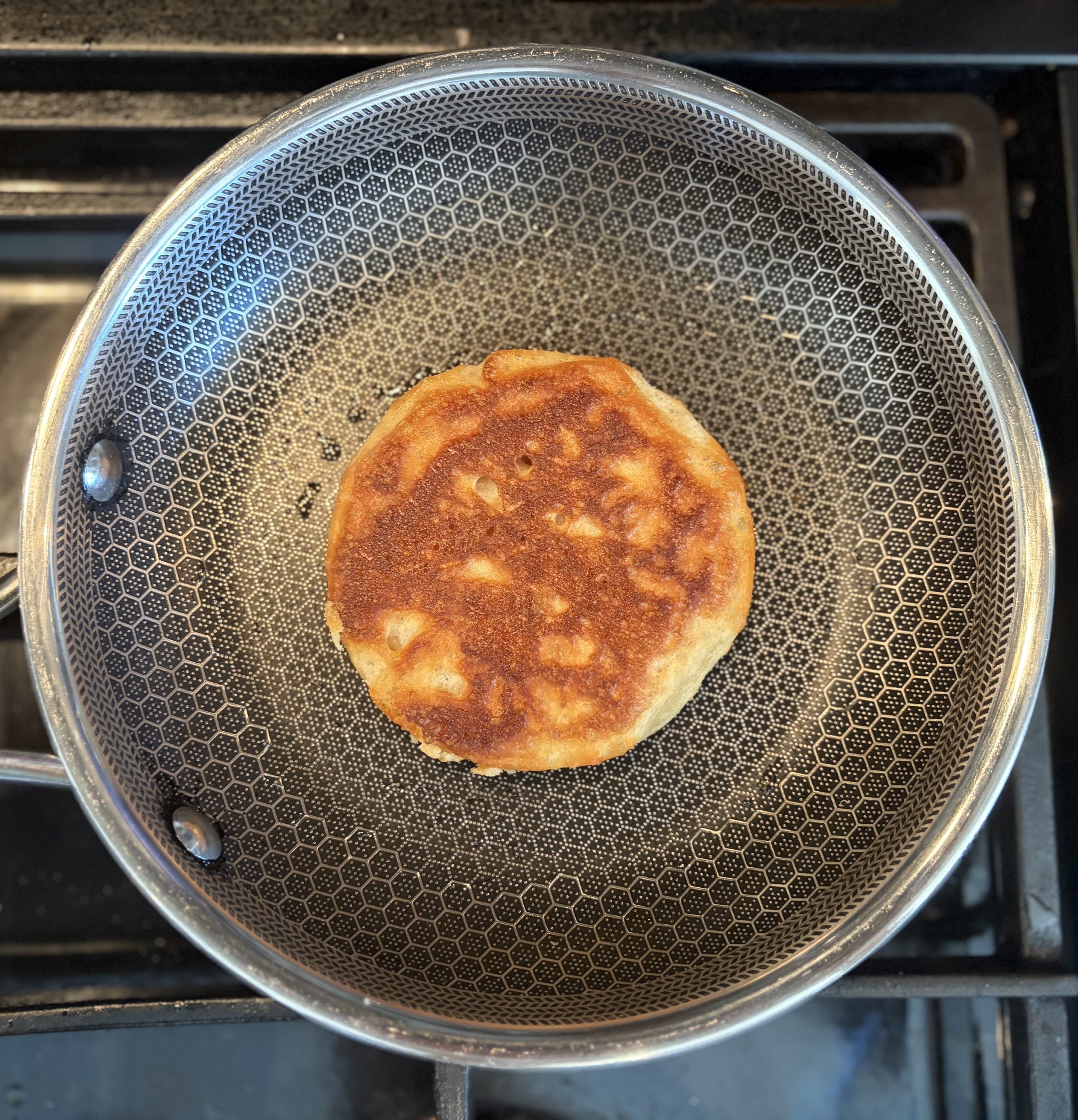
Are we trying to deep fry this crumpet? No, not even close. But let’s not be shy about the presence of some fat here. Ultimately, oil is not only going to facilitate the browning (i.e. Maillard reaction) which is going to give us flavour to get excited about, but it’s also going to help us achieve a crisp bottom to our crumpet. Without it, your crumpet won’t crisp so much as just dry out which, after all that time, is something of a depressing finale.
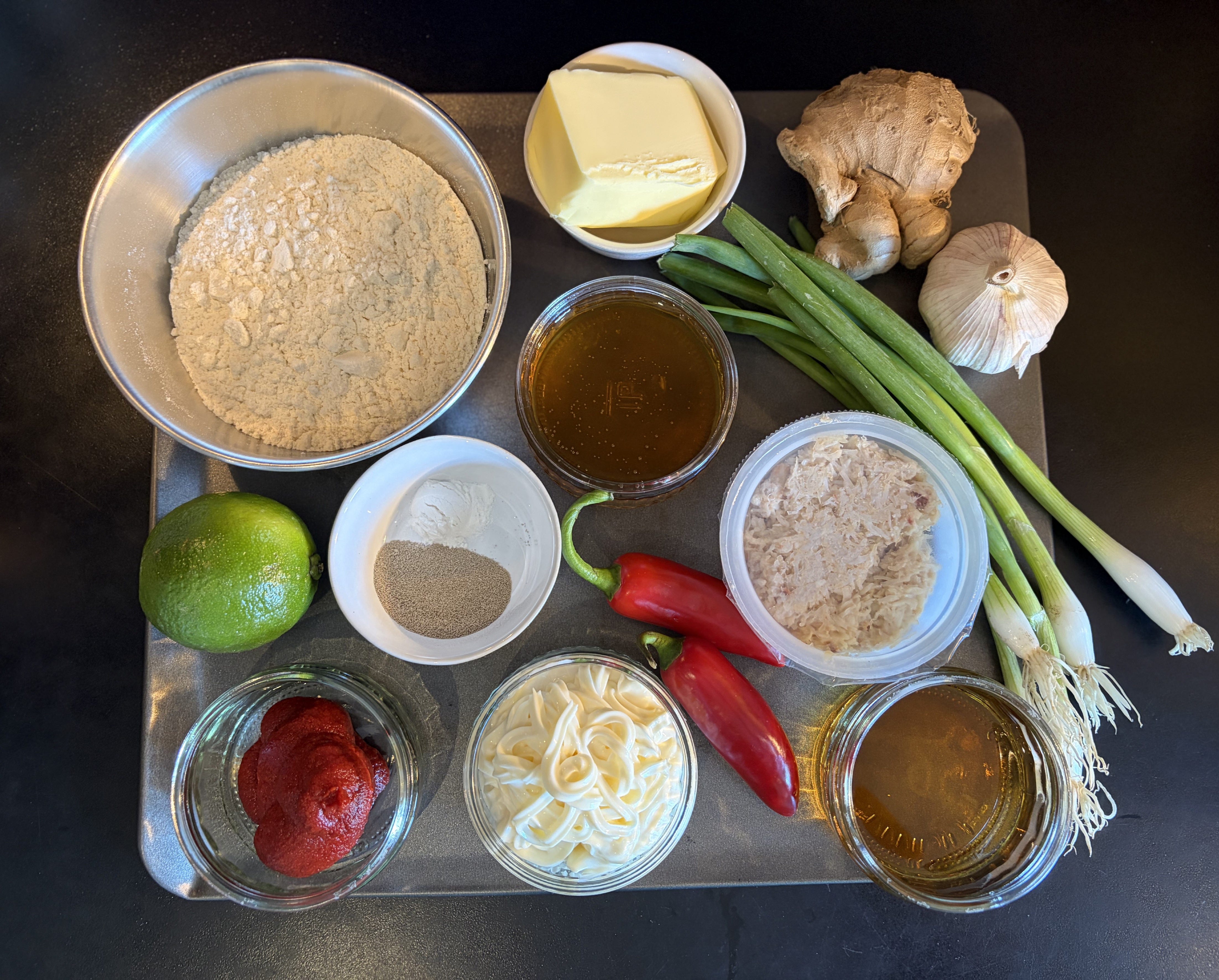

Serves: 4 (approx. 2 crumpets each)
Equipment
2 cooking rings (approx 15cm diameter)
Ingredients
For the Crumpets:
200g plain flour
½ sachet dried yeast (i.e. 3.5g)
½ tsp baking powder
300ml milk (plus more if needed)
½ tsp salt
For the Lime Mayonnaise:
100g mayonnaise
Finely grated zest of 1 lime
For the Crab mix:
180g white crab meat
Crispy chilli oil, to taste
Juice of 1 lime
2 tbsp chopped fresh coriander
For the Bang Bang Sauce:
50ml vegetable oil
40g peeled ginger, peeled and chopped into even pieces
40g garlic, peeled and chopped into even pieces
40g red chillies, deseeded and chopped into even pieces
5 tbsp fish sauce
110g sriracha
2 heaped tbsp tomato paste
65g honey
60g lime juice
75g cold butter, cubed
1/2 bunch of spring onions (about 3 or 4), finely sliced
Salt and pepper, to season
To serve:
1/2 white onion, finely sliced
1 tsp cayenne pepper (to dust over)
Method
To make the crumpet: Place the plain flour, dried yeast and baking powder into a bowl with a pinch of salt and mix together.
Heat your milk up to 41°c and mix with the yeast. This will give the yeast a kick start but careful not to add it when it’s hotter, or it will kill the yeast entirely.
Mix in the milk until there are no lumps, and vigorously work the mixture using a balloon whisk, whisking side to side with speed for a couple of minutes in order to develop the gluten in the mixture.
Cover with a clean kitchen towel and leave to prove for an hour in a warm spot, or until the mix is super bubbly.
Place two greased cooking rings in a frying pan and set over a high heat. Pour the batter into the rings, immediate reduce the heat to medium low and cook for around 4 minutes until bubbles start to appear and the batter is set to the touch.
Using tongs, remove the rings from around the crumpets. Flip the crumpet over and cook for a further minute on the other side, until lightly coloured. Set aside. (See notes)
Repeat with your remaining crumpet batter until it’s all used up and your crumpets are cooked and set aside.
To make the lime mayonnaise: mix together the mayonnaise and lime zest.
To make the crab mix: place the picked crab into a bowl then add just enough mayonnaise to coat. Add crispy chilli oil, lime juice and chopped coriander then season with salt and pepper,
To make the Bang Bang Sauce: heat the oil in a pan set over a medium low heat then add the ginger and garlic and sauté until soft and starting to turn golden, stirring often. This will take about 5 minutes or so.
Add the chillies to the pan and cook for a further minute, then deglaze with the fish sauce and start to reduce the liquid by half.
Add in the sriracha, tomato paste, honey and lime juice then bring to a simmer and cook for a couple of minutes.
Add the cubed butter and mix on a low heat until melted, then use a stick blender to pulse the sauce until emulsified, stopping at your desired consistency (we like it a little chunky). Remove from the heat then add the spring onions and decant immediately - the spring onions will wilt in the residual heat.
To Serve: place the toasted crumpet onto the plate and top with three spoons of the Bang Bang sauce. Place a large spoon of crab meat on top then garnish with sliced white onion and a dusting of cayenne pepper, for colour.

Don’t be afraid to adjust your crumpet batter. If things aren’t bubbling as they should, revisit the why and how section to troubleshoot. They may be too thick, in which case add a splash of milk and try again.
These are best fresh but can be made in advance and frozen until needed.
The bang bang sauce will keep for up to a month in the fridge and is an amazing thing to have on hand for a quick noodle dinner, over eggs or a condiment for some charred veg.
Thanks for reading!

‘‘What McDonald’s is to fast food, Hawksmoor is to steak. Always consistent, always satisfying, and a great spot to take my kids to. One of my go-tos for a reliable dinner out.” - Jack
Next week, we elevate the most misunderstood spud of them all: the hasselback.
See you there,
Jack & Will
youtube: @fallowchefs
instagram: @fallowchefs
tiktok: @fallowchefs
Visited FOWL yesterday and every mouthful was absolutely banging. Sadly my stomach has limited capacity do couldn't order this dish but I'm looking forward to ordering it next time I visit.
Is it possible to get the recipes in pdf form? Thanks. Can’t wait to try it out.