

Crispy Chilli Oil
How a cult favourite took centre stage on our menu

Welcome back to Fallow Chefs, lifting the lid on restaurant cooking for you at home.
This week we join just about everyone on the planet in waxing lyrical about crispy chilli oil. Beyond obsessing about just how good it is, we’ll dish out the (not so) secret of our favourite brand and show you how easy it really is to make an epic batch at home.
Before we get there, a quick reminder that we’ll be sharing a recipe every week, along with lots of other extras on our Substack page including our podcast, reviews and behind the scenes extras. Subscribe to join us and get in on it all.
Onto the recipe!
Jack & Will
It’s hard to imagine that 5 years or so ago, ‘crispy chilli oil’ would draw blanks from most people in the UK. It’s now splattered over the social page of every influencer, home cook, and avid brunch goer the world over. And for good reason. The stuff is a cheap, accessible, easy way to add incredible texture and flavour onto a range of dishes that go far beyond the cuisine it was originally made for.
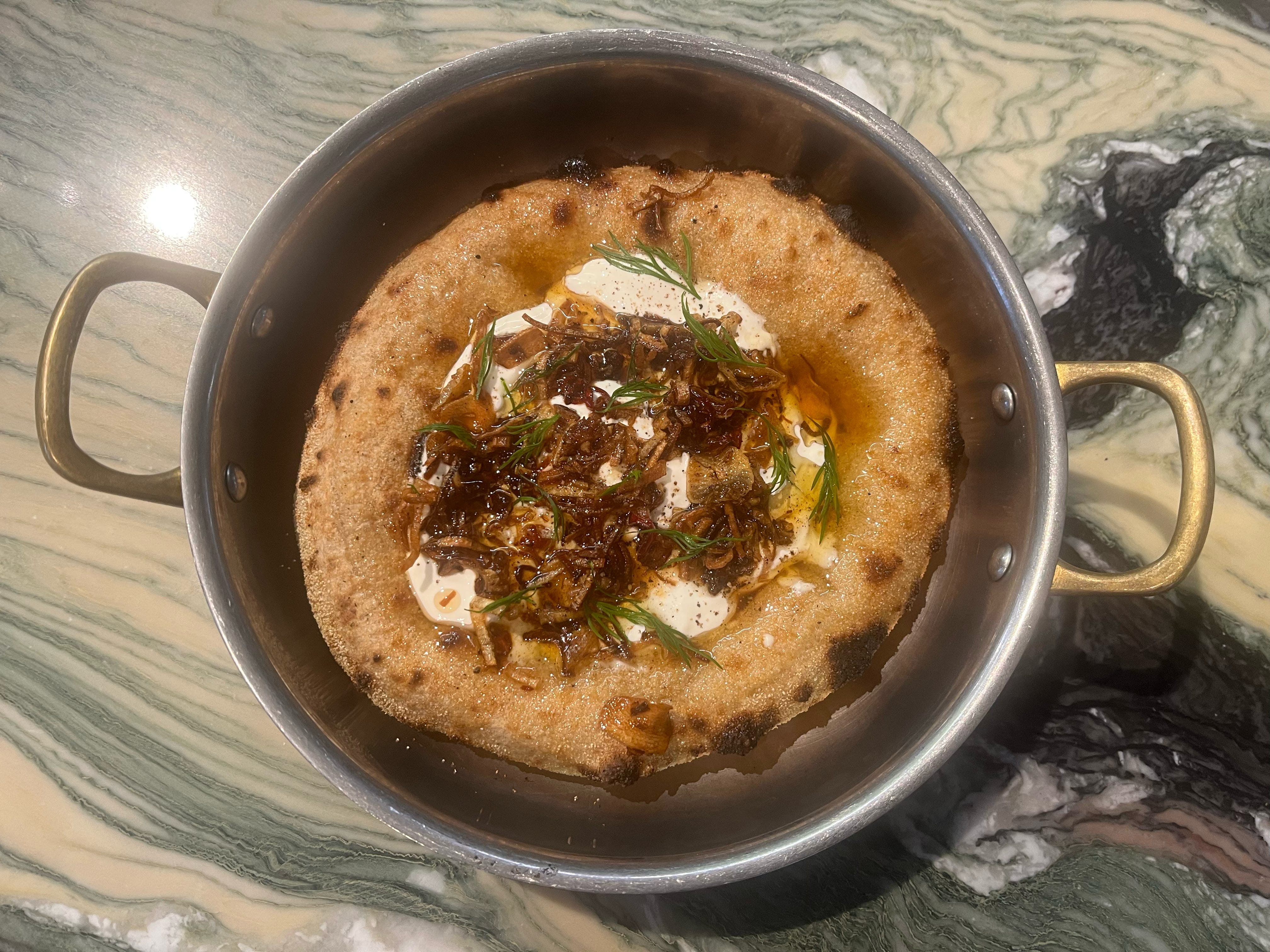
That impact isn’t accidental, it’s fundamental to its birth. Crispy chilli oil originates in China, but with roots that link way back to the 16th century: Spanish and Portuguese explorers introduced chillies from Central and South America to the rest of the world and that punch of flavour (in a package that was much cheaper than the then very expensive black pepper) made it explode in popularity.
For me, the first time I tried it was in a staff canteen, where there was a little jar of Lao Gan Ma chilli oil unassumingly sitting on the side. I’d be hard pressed to remember much else about what that canteen had to offer but that powerhouse condiment irreversibly caught my attention.
It would appear that the Crispy-Chilli-Oil-gods spotted it, took a shining on me and manufactured a way for me to be gifted a life-time supply of the very best of the stuff:
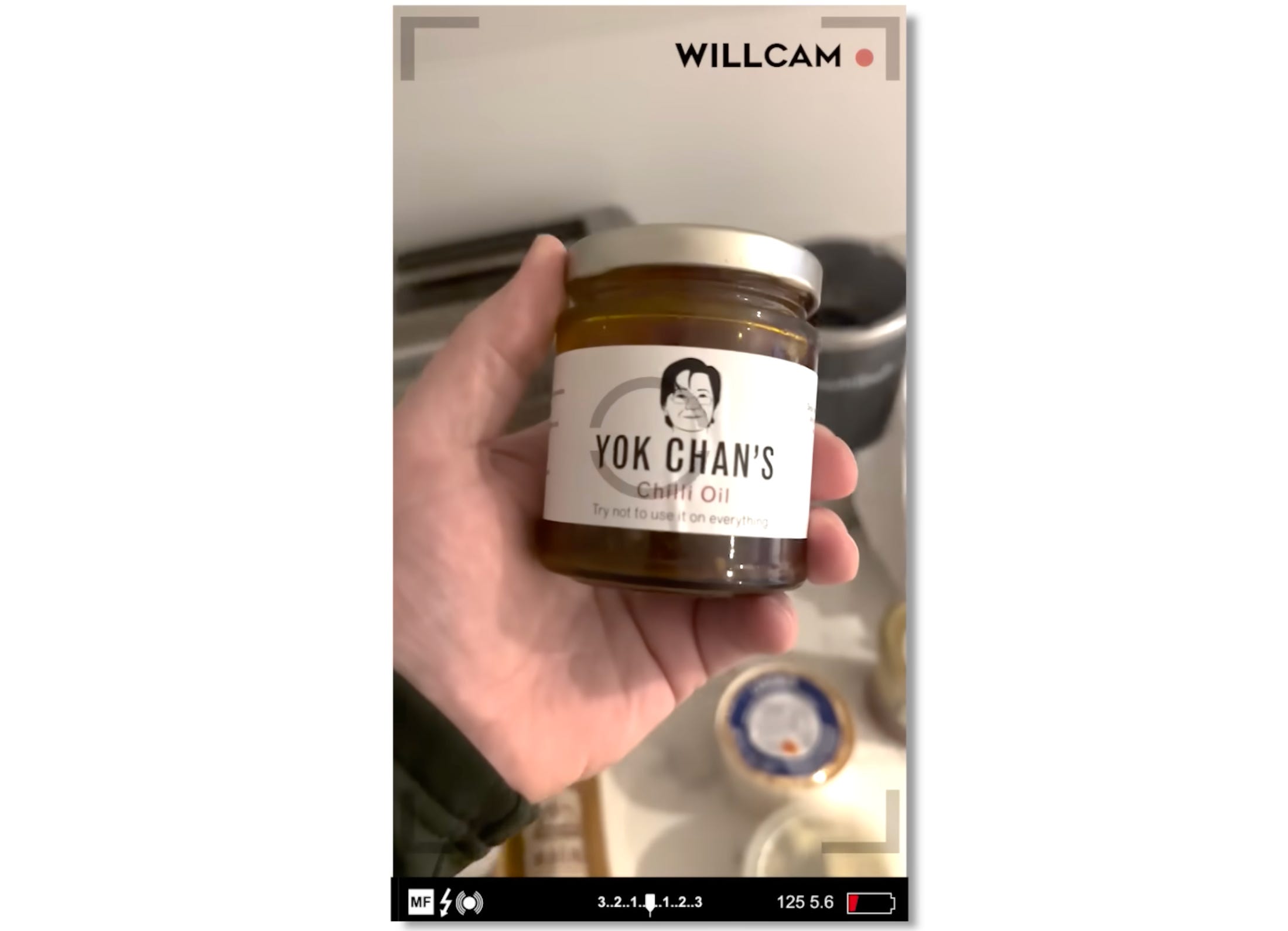
When we were getting going with the Fallow Chefs YouTube channel around 3 years ago, we were invited to do a feature with the lovely guys at Sorted Food and they asked if I would do a fridge takeover. Sitting in my fridge I had a jar of chilli oil from a company called Yok Chan’s - she does what I think is the most beautiful chilli oil going - and shortly after the video went live, I got a message from the lady behind the brand. She had been making it in her spare time since 1996 (!), but since the video went live she’d had to quit her job and go full time to account for the demand. An absolutely delightful bi-product of social media there. Not to mention the glut of chilli oil I now have very grateful received from Yok and her son Michael.
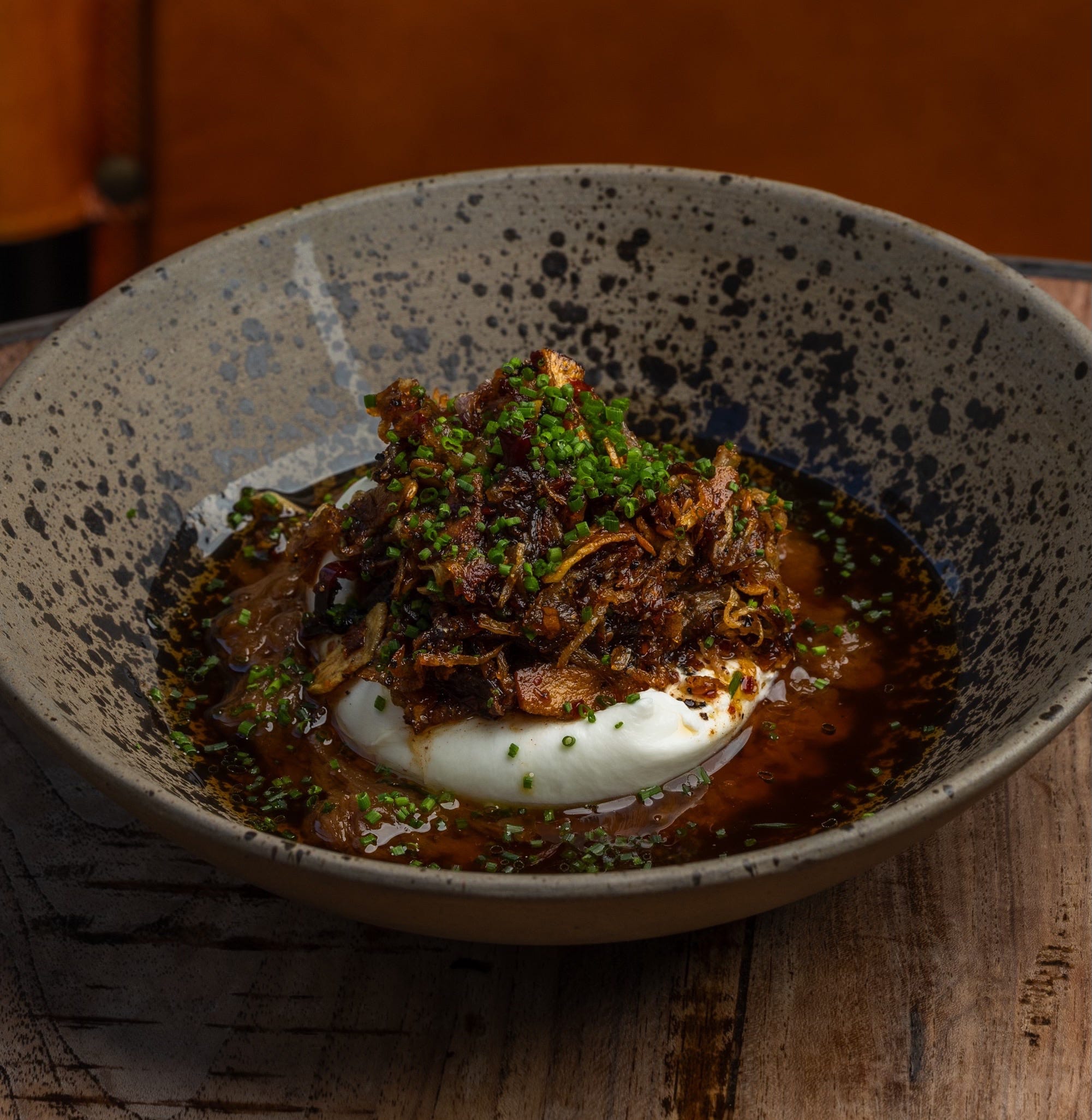
Beyond my personal obsession, we soon developed our own crispy chilli oil over at Fallow. The first time it made its way onto the menu actually wasn’t in its own right but as an ingredient to finish a sauce on a Char Sui pork dish. Splitting the unctuous pork sauce out with the chilli oil was a gorgeous way to bring that fragrant heat to the finished dish.
Once it appeared in the kitchen, we never looked back and started to play around with it on other dishes, beginning to view it with the potential to be the core element and not just a final flourish on the plate. With that thinking we landed on perhaps one of our simplest but most flavourful dishes: a bed of deeply caramelised onions, topped with creamy burrata, lavished with our crispy chilli oil and finished with a smattering of chiffonade parsley for that hit of freshness. The creaminess of the burrata, the sweetness of the onions and the spiced heat of the oil, mopped up with some crusty sourdough or our house focaccia: it’s bonkers how good it is.

THE SLICE
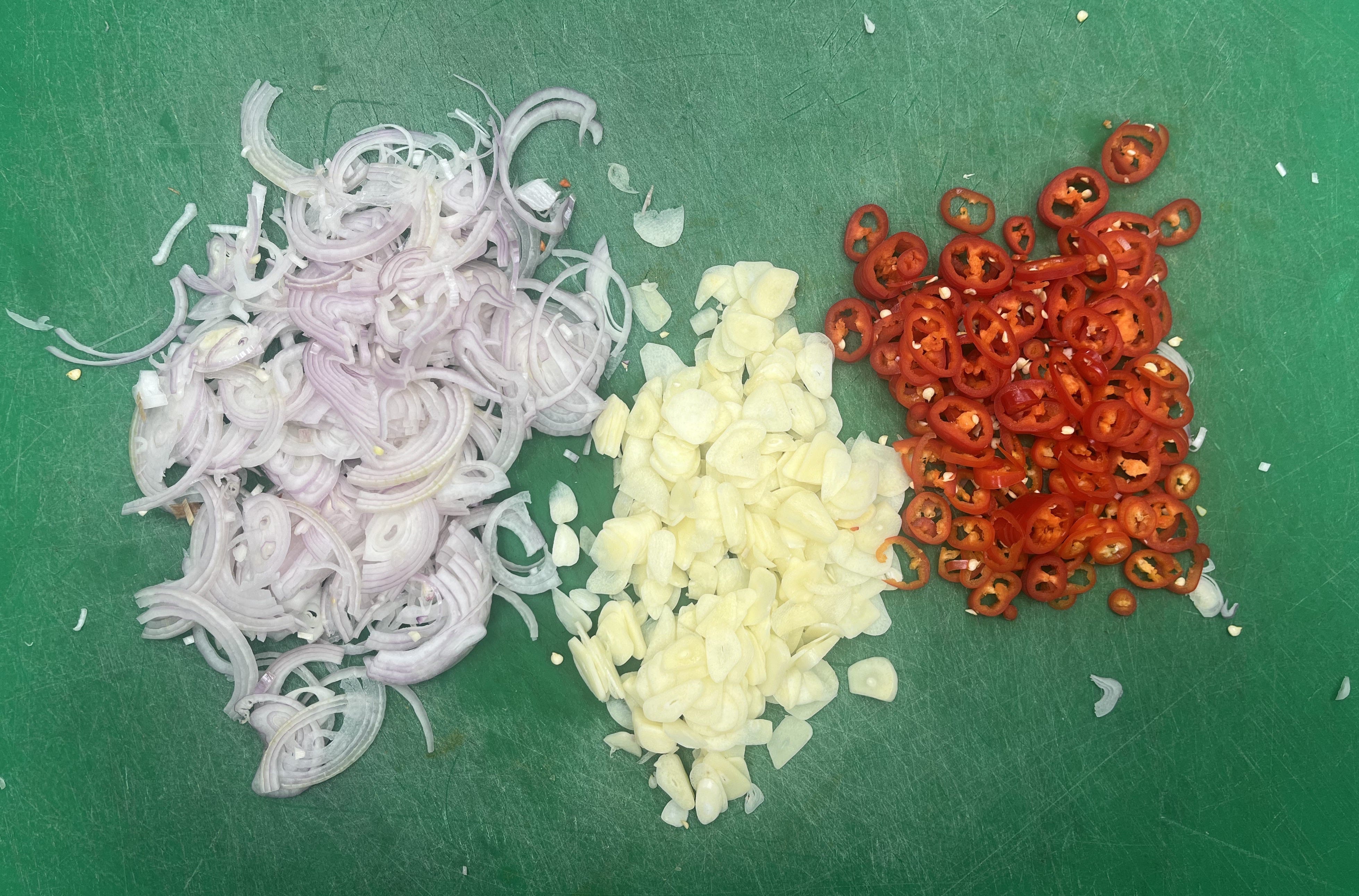
An even slice is crucial here. This is a good time to hone your knife skills. In order to end up with a product that is genuinely crispy in nature, not just in name, it’s absolutely worth taking your time to get a really fine and even slice on all your fresh aromats. The thickness of your slice is directly linked to the speed at which it takes on colour and the speed at which it crisps up. Too thin relative to your average slice, and you’ll find it burns and lends your oil an acrid flavour, too thick and it will remain pallid and soggy.
THE HEAT
Maybe it goes without saying that chilli is not just a one dimensional source of ‘heat’. There are around 4000 varieties of chillies the world wide, and eat one has its own profile from fiery hot and fruity to mild and smoky and everything in between. By adding both fresh chillies and dried chilli flakes we benefit from the bright heat and almost herbaceous quality of the fresh while bringing in the deeper, earthier flavour of the dried. If you are used to just adding one type of chilli into your cooking and calling it a day, let this be your sign to diversify and enjoy the benefits.
THE FRY


First things first: Don’t be tempted to dump everything in the pot at the same time. Faffy though it might be, it is definitely worth frying each of your 3 fresh aromatics (shallot, garlic and chilli) separately as they fry at different rates and you want to give them each the opportunity to get properly crisp without the other burning. Secondly, it’s all about the low heat. The assumption is that as soon as something takes on the right colour, it will invariably be crispy. Not the case. In order to get something crispy, you are using the heat of the oil to evaporate all the internal moisture to result in that pleasing snap while also developing the colour that you’re after. Too high a heat and you won’t successfully draw out the moisture before you land yourself in burnt territory.
THE BLOOM
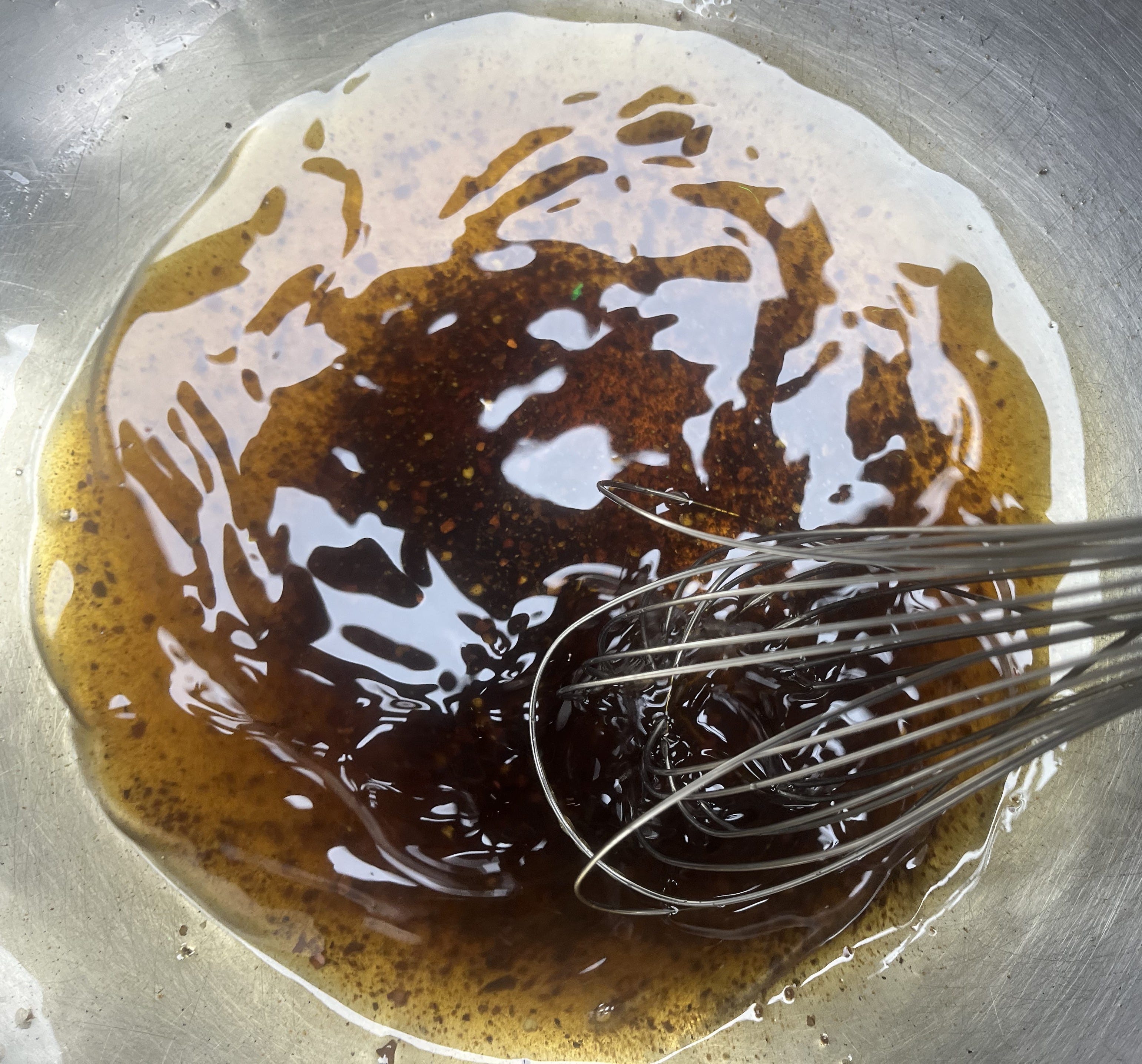
You may have heard chefs refer to ‘blooming’ spices. A term which does nothing to help itself sound serious. What it refers to is the process by which we essentially wake up the flavour in spices. Most flavour compounds in spices are fat-soluble as opposed to water-soluble, meaning that the taste and aroma molecules dissolve and are drawn out in fat. This is why we heat up our oil to pour over our spices, rupturing the spices’ cell walls and allowing all that flavour to rush out and permeate into the whole product. The temperature of the oil is crucial here as too hot and your spices will burn, not bloom.
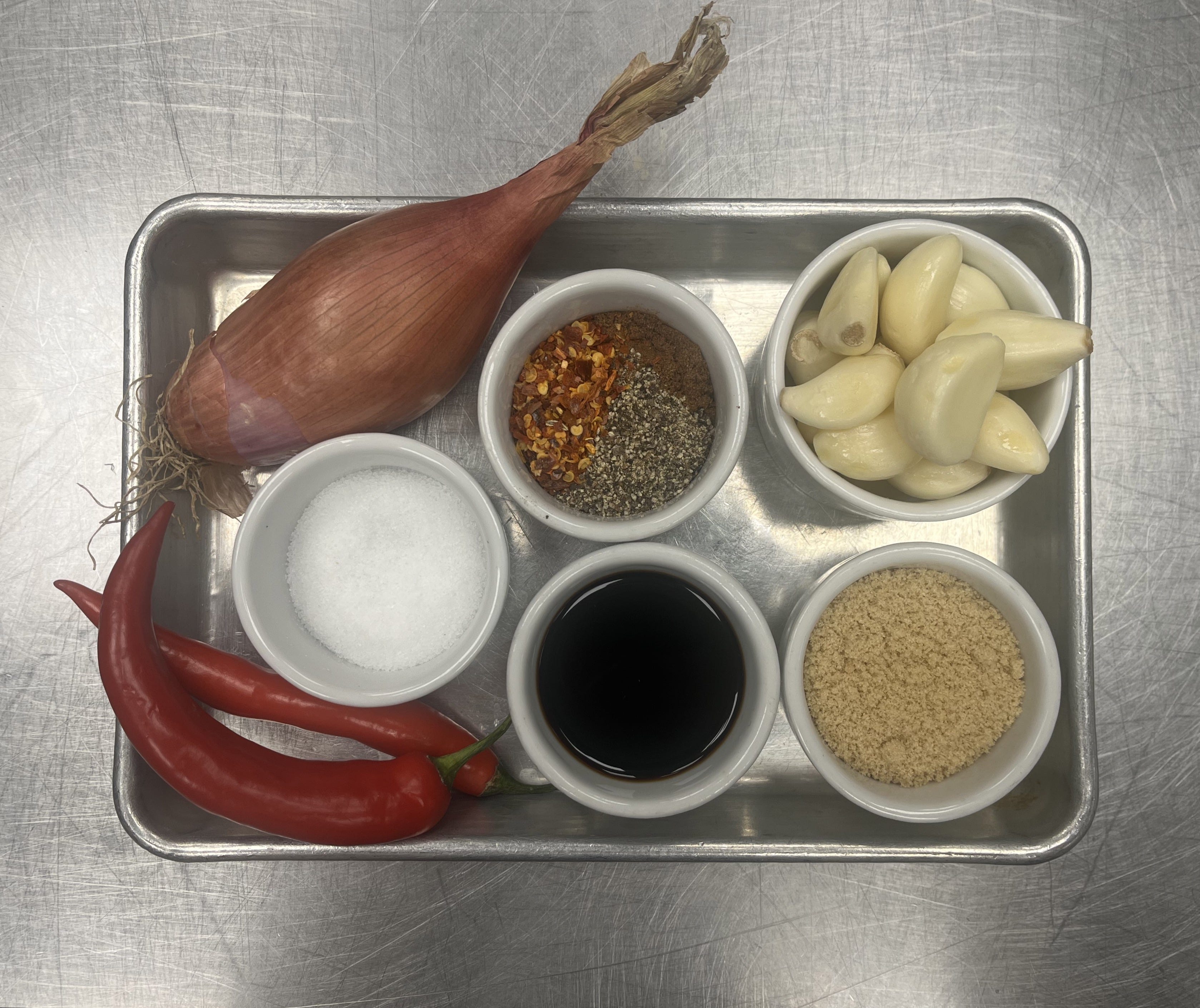

Equipment:
A heavy bottomed pan (a heavy bottom means more mass to hold heat. This means the oil temp won’t drop too quickly when you add in your aromatics, plus it can handle more heat without warping your pan)
Probe
Spider or heat-proof slotted spoon
Ingredients:
850g Shallot - finely sliced
100g Fresh chilli - finely sliced
125g Garlic - peeled and finely sliced
1 litre Vegetable oil
10g Ground star anise (ideally this would be freshly ground in a spice grinder)
25g Cracked black pepper
18g Red chilli flakes
60g Soy sauce
50g Light brown sugar
20g MSG
Method:
Yield: 1kg
Heat your oil in a large, heavy bottomed pan over a medium heat, probing until it reaches a steady 150°c.
Fry your shallots in small batches, stirring to help encourage even colour (the shallots on the outer rim of the pan will likely get darker a little faster) until light golden brown and crisp. A general rule of thumb when frying is to remove things when they’re a shade lighter than what you’d like, as they’ll continue to cook and darken in the residual heat once you remove them.
Remove with a spider / slotted spoon onto a plate lined with kitchen towel or a clean tea-towel (one you don’t mind getting grease spots on it). Make sure not to overload the pan or it will be difficult to get them crispy.
Repeat this process with the garlic and then the chillies, again in small batches.
Once all your aromatics are fried and draining, heat the oil back up to 180°c and mix the ground star anise, cracked black pepper and red chilli flakes together in a large heat-proof bowl.
Once hot, pour the oil over the spices, being careful as the moisture in the spices will cause the oil to bubble and foam. It’s worth doing this through a fine heat-proof sieve if you have one as within the oil there will invariably be small, burnt bits of your aromatics that were too small to catch with your spoon.
Leave your oil and spices for a minute to bloom then mix well. In a separate bowl, combine the soy sauce, sugar and MSG. Add this to the oil mixture and leave to cool. If you add your sugar right away you’ll find it becomes too sticky and difficult to mix in.
Finally, mix your fried crispy elements to the cooled, flavoured oil and store in a sterilised jar.

This will last for at least a month in the fridge
One of the best things about making a batch of crispy chilli oil is that you’ll often find there’s an excess of flavoured oil, beyond the crispy sediment. As well as simply drizzling it onto anything and everything as is, that oil can make a beautiful chilli dressing (something we use to glaze some of our flat breads at Roe) or even a spicy mayo. Whatever you do, don’t throw it away.
Thanks for reading!

‘A bit left field, but Uber Flights is the best life hack I’ve been given this year. Genuinely makes one of my most hated bits of admin so much easier.’ - Jack
Next week we’ll be giving due credit to the kitchen underdog: confit garlic.
See you there,
Jack & Will
youtube: @fallowchefs
instagram: @fallowchefs
tiktok: @fallowchefs
Thanks for reading Fallow Chefs. Subscribe for regular recipes and exclusive content.
Thank you for sharing! fyi, it seems the second sentence in The Fry section should say “garlic” instead of “ginger.”
Awesome, I made 2 large jars.