

Ultimate Hasselback Potato
The most misunderstood spud of them all and the new way to cook them

Welcome back to Fallow Chefs, lifting the lid on restaurant cooking for you at home.
This week we’ll be doing our best to defend the name of the overlooked hasselback potato. We’ll tell you why you’ve been doing it wrong so far, why we love it so much, and teach you the tricks of the trade so you can make one so good you’ll be converted too.
If you like this post, subscribe to receive sharing tips, recipes, and more every week.
Thanks for reading,
Jack & Will
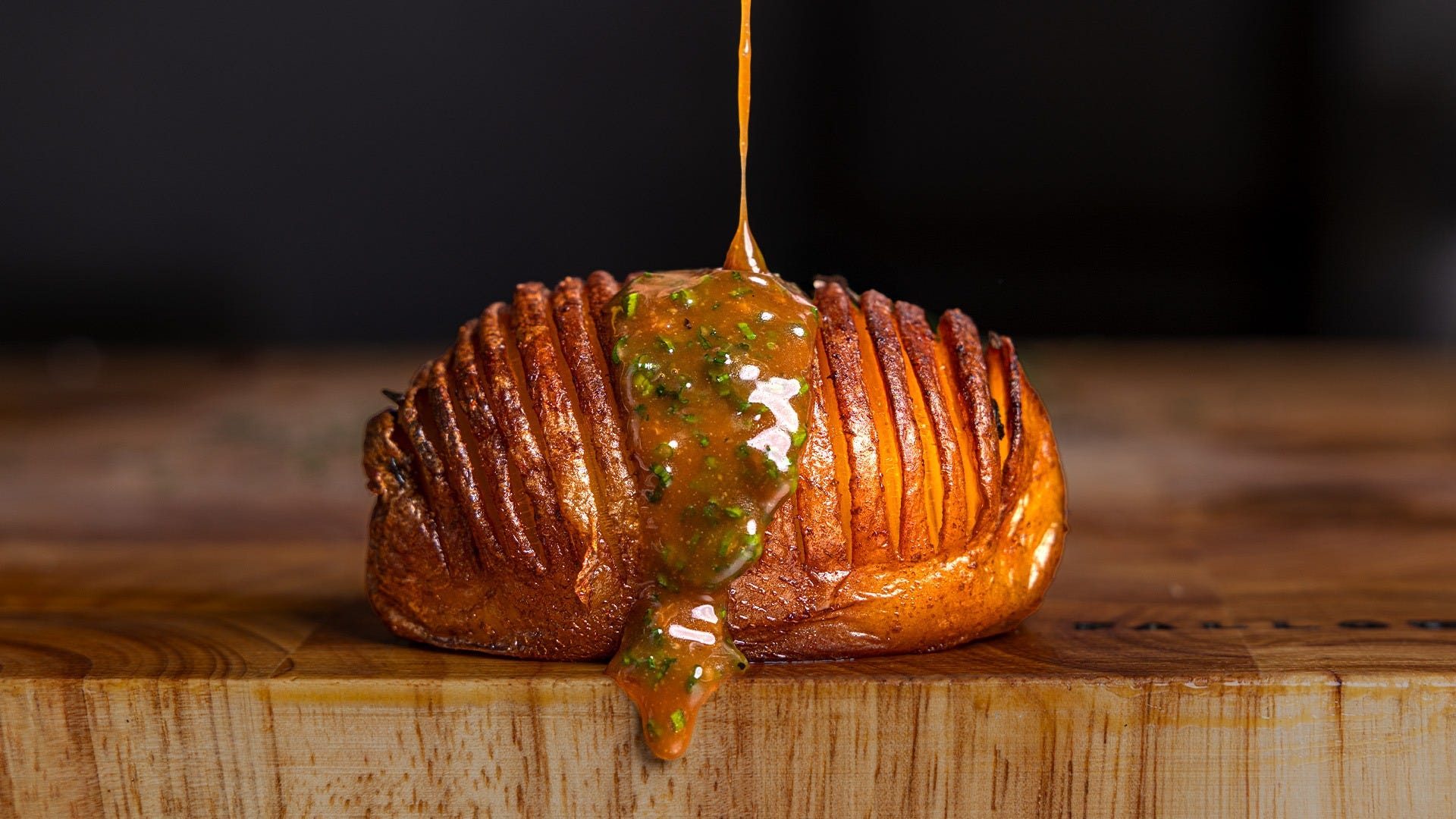
The hasselback potato is, without a doubt, the humble underdog of the already humble spud.
In a world of chips, roasties, crisps, mash, and baked potato — hasselbacks are too often left behind. Never quite as fluffy as a baked potato, never quite as crunchy as a roastie - the hasselback seems to promise much (more surface area, more texture, right?) but deliver little. Today, I’m here to defend the hasselback, saving its reputation with good and proper technique. With a silky, decadent and tender inside, and artful fanned slices with a pleasant crisp, the hasselback is easily one of my favourite sides to whack up for a dinner party; and it’s soon to be yours too.
The story goes that it was invented by Leif Elisson, a culinary school student at the iconic Hasselbacken restaurant and hotel in Sweden, as a way to speed up the process of baking potatoes. First served in the 1950s, it received little attention in the next half-century, until gaining attention from food bloggers in the 2010s (I’m talking OG famous bloggers like Joy the Baker and Gina Matsoukas). The recipes are good and tasty — but they’re not changing my mind about putting the hasselback at the top of my list of potato dishes. That didn’t change until I went to dinner at Trinity.
For a while now, Trinity Restaurant has held the trophy for 2 of the best potato dishes I’ve ever eaten: the pomme boulangère (i’ve waxed lyrical about that one before) and the hasselback potato.
As a life-long potato fan, trying Adam Byatt’s hasselback was something of a revelation moment. Never has there been a more perfectly scored potato; it came in a beautiful copper pan, served tableside with a little pouring sauce. The waiter lifted the lid, and an unmistakably buttery and (surprisingly) beefy scent smacked me round the face.
And what followed was an unforgettable first bite. The flesh was somehow creamy, fluffy and melting with flavour all at the same time. It was all glazed with a smooth, rich stock that made the potatoes glisten. A spud moment for the books.
The difference between this hasselback and ones I’d previously eaten was that the intense flavour was the first thing in the forefront of my mind. In fact, I’d taken various mouthfuls before I had a realisation: the texture of this hasselback is the least interesting thing about it. Was it as crispy as a roastie? No. Did I actually miss that? No way. The dish was so deep and rich in stock, the fact that it was not as crispy was totally insignificant.
So many people get tunnel-visioned on the textural element of a hasselback, and I do believe that this is what makes it such a tragically misunderstood dish. Those slits are there to maximise on flavour; the crispiness is simply a happy byproduct. This is what I learned from Adam Byatt’s version at Trinity.
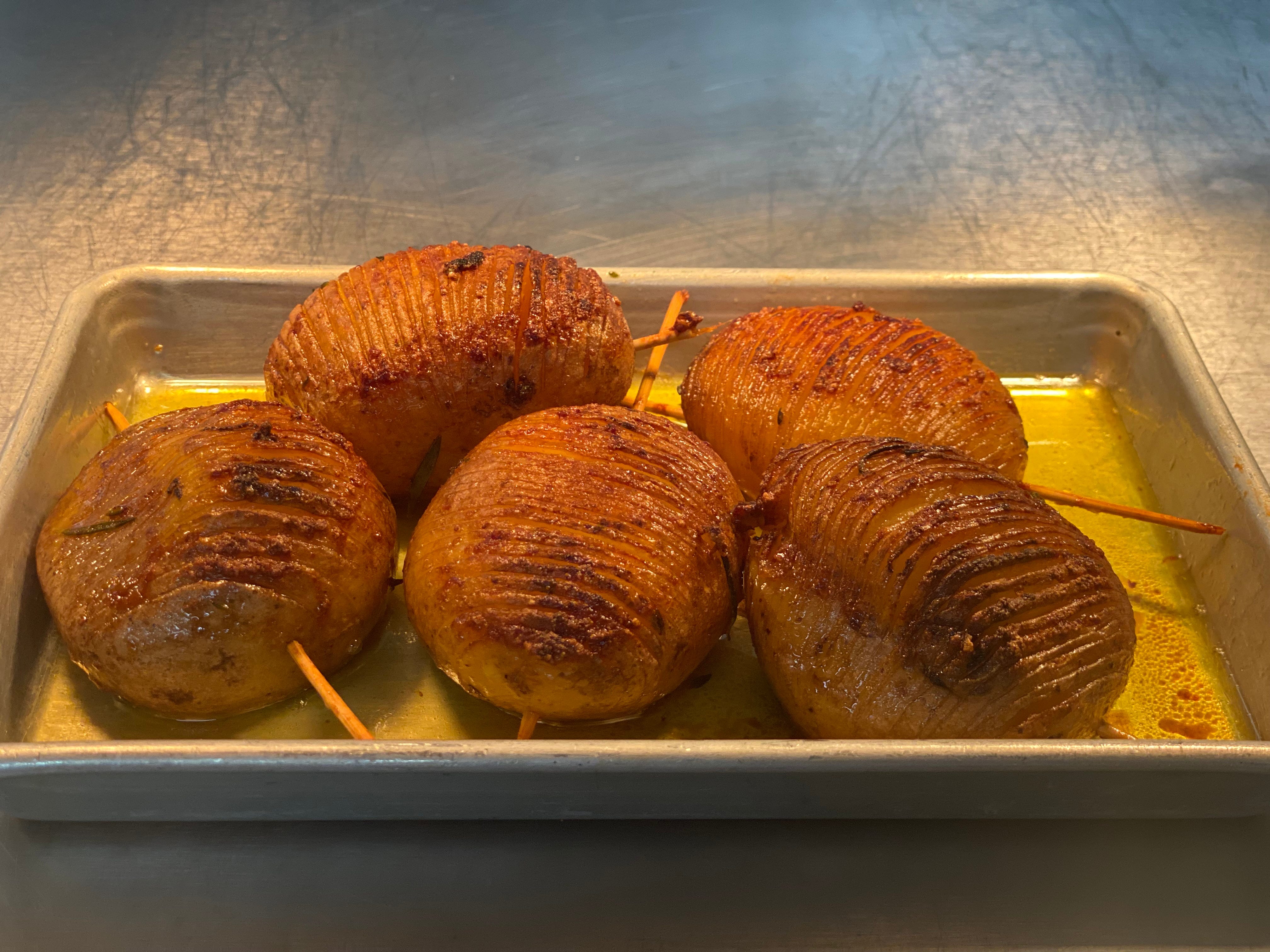
Just like that, I was converted: I’d cracked the code to the perfect potato dish. I sat Jack down and told him that we should put a hasselback on the menu at Fallow.
Unfortunately, it never got past the testing stage. No matter how great the dish would come out during development, it was a nightmare to execute at scale.
The hasselback potato is a dish that really needs to be made á la minute (all elements prepared and served immediately). At Trinity, Byatt’s team work swiftly and meticulously to craft a perfect hasselback potato the moment they see one being printed by the ticket machine on the pass. It’s simply not feasible to do that at Fallow, where we welcome 150 guests in one seating, and take in up to 1000 covers a day (for context, Trinity can seat about 40 at a time). We tried to do as many stages as possible before service started, but neither of them worked. You can’t slice them without leaving them submerged in water or stock to stop them oxidising, but if you submerge them in stock they go too brown and get too dark later on when you cook them. Leaving them in water would often result in mushy potatoes prone to falling apart. Pre-cooking them entirely makes them too difficult to store, and they’re just never as good when you reheat them.
Although we were keen on the dish, we sadly accepted that a Fallow hasselback was not on the cards.
Since we refrained from serving it at the restaurant, the hasselback has become a dish I keep coming back to in my home cooking. In fact, it has become a point of enduring rivalry between Jack and I, as we have different recipes and are always competing for the title of best hasselback. In Jack’s version, he simmers the potatoes in stock and then cooks them in clarified butter. Whilst Jack’s version is more texture-forward, mine prioritises flavour, since that’s what stands out to me in a good hasselback. In other words, my hasselback is superior to Jack’s. My secret? I simmer the potato in stock, but then I also cook them in the oven submerged in stock and butter. The results are incredible: all the flavour, satisfyingly crispy grooves, and buttery indulgence. Happy hasselbacking.

Keep reading with a 7-day free trial
Subscribe to Like a Chef to keep reading this post and get 7 days of free access to the full post archives.