

Sriracha Sauce
The story of one of our most iconic recipes

Welcome back to Fallow Chefs, lifting the lid on restaurant cooking for you at home.
This week we are talking lacto-fermentation. More specifically, sriracha sauce. The sauce that has taken the world and our restaurant by storm; we’ll learn how to make a super delicious version at home and uncover the mysteries shrouding the fine art of fermentation.
Thanks for reading,
Jack & Will
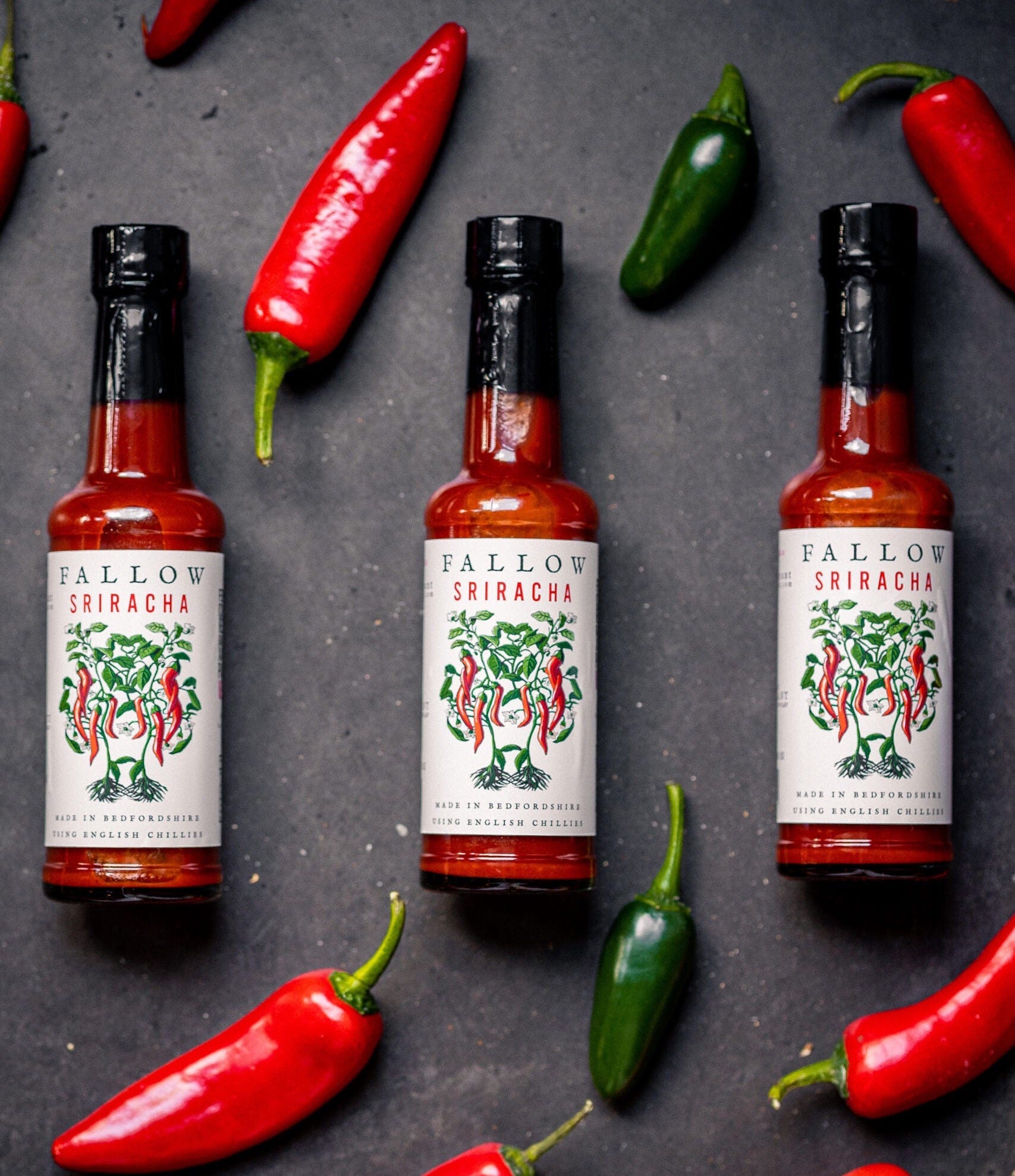
We all have a friend who is adamant that they are ahead of the curve when it comes to trends. The friend who regularly drops in that they found that band/director/writer/ BEFORE they were famous. Well, my confession is that I am, in fact, that friend. Or at least I am when it comes to sriracha. In the last 5 years sriracha has cemented itself as one of Britain’s best loved condiments, but it has featured in my cupboard for over a decade.
I first discovered sriracha back at university; I immediately thought (and still do) that it was the perfect balance of sweet, salt and acid with a fermented tang. The ultimate sauce which I would buy in a steady stream from my local Aldi - appearing on more dishes than was arguably necessary.
It stayed quite happily in my cupboard before it caught my attention as a potential for the menu while Jack and I were doing our residency at Crispin. At that time, there was a great chef called Michael Thompson (Fera, Claridges) who was scheduled to do the next residency after us. We got to know Michael over that time and we fast became aware of his obsession with all things fermented. He showed us his approach and to be honest, his love for it was contagious.
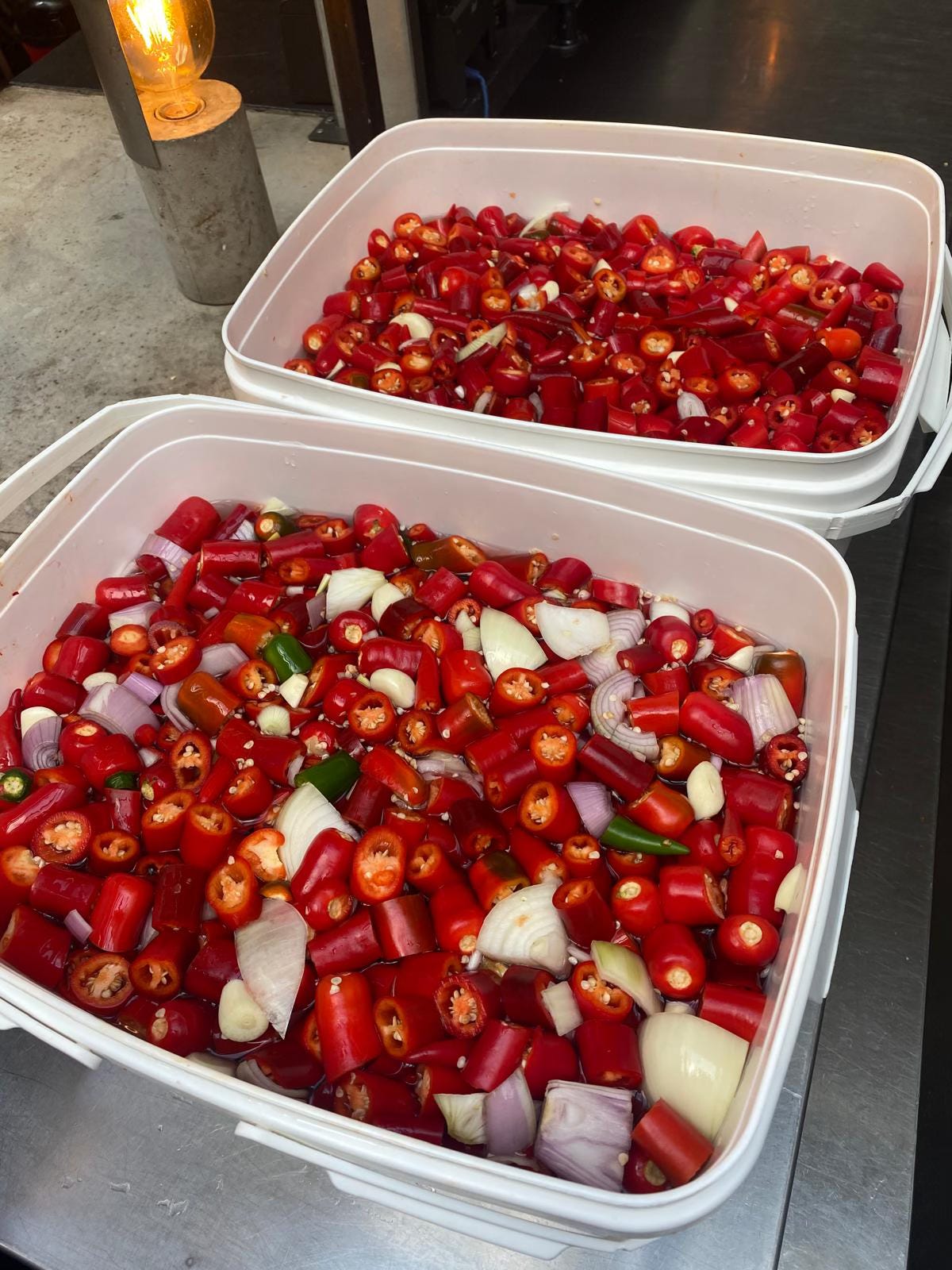
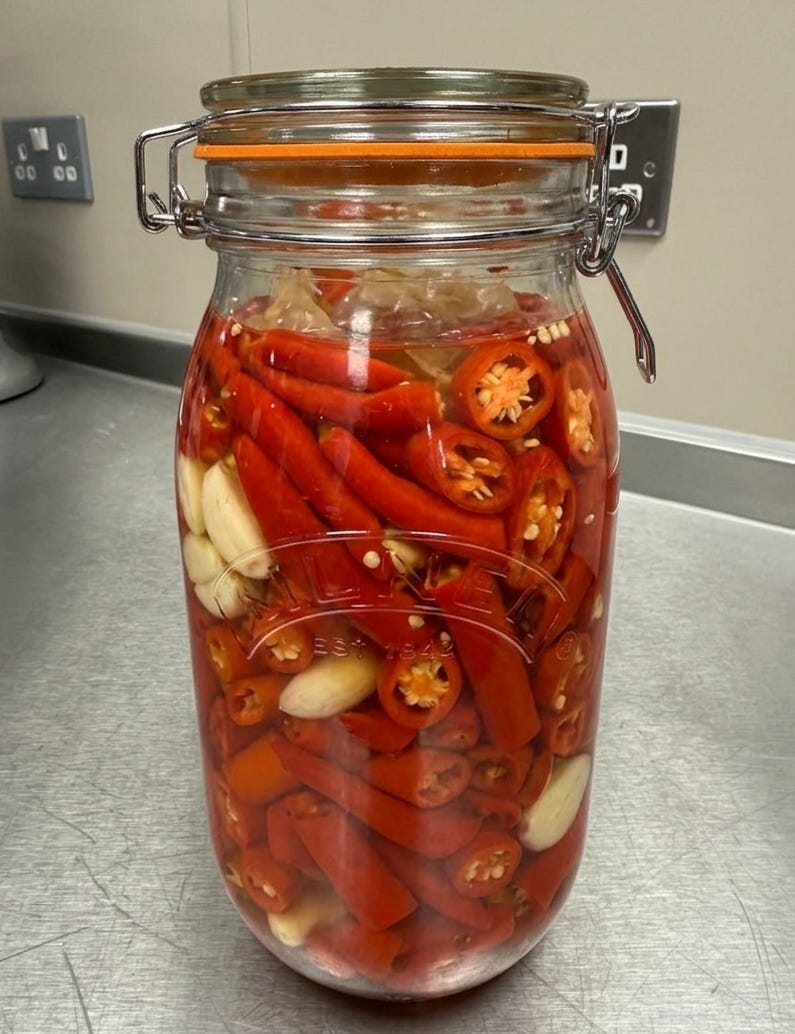
So we decided to give it a go. Originally we were fermenting it in the whey buckets that were coming in for our whey cauliflower dish; rinsing out, disinfecting, filling with heaps of garlic, chilli and salt and letting it do its thing. Once it had fermented we would blitz it and season it with vinegar, tamari and sugar till it tasted punchy and arresting (and our mouths were numb). We fell in love.
The first dish that we used it on was a pullet egg dish. Pullet eggs; the first and very small laid eggs from a hen. These are good quality eggs that wouldn’t make it into circulation because they were deemed too small by retailers and so were just completely disregarded (a fact that is slowly changing - I actually saw a carton of them labelled as ‘oddly shaped’ in my local supermarket the other day). We’d sous vide the eggs at 56°c, panko and fry them and then sit them on a bed of flame grilled greens dressed with our hero debut: Fallow sriracha. It was a really, really great dish. And it started a relationship between sriracha and Fallow that has just continued since then.
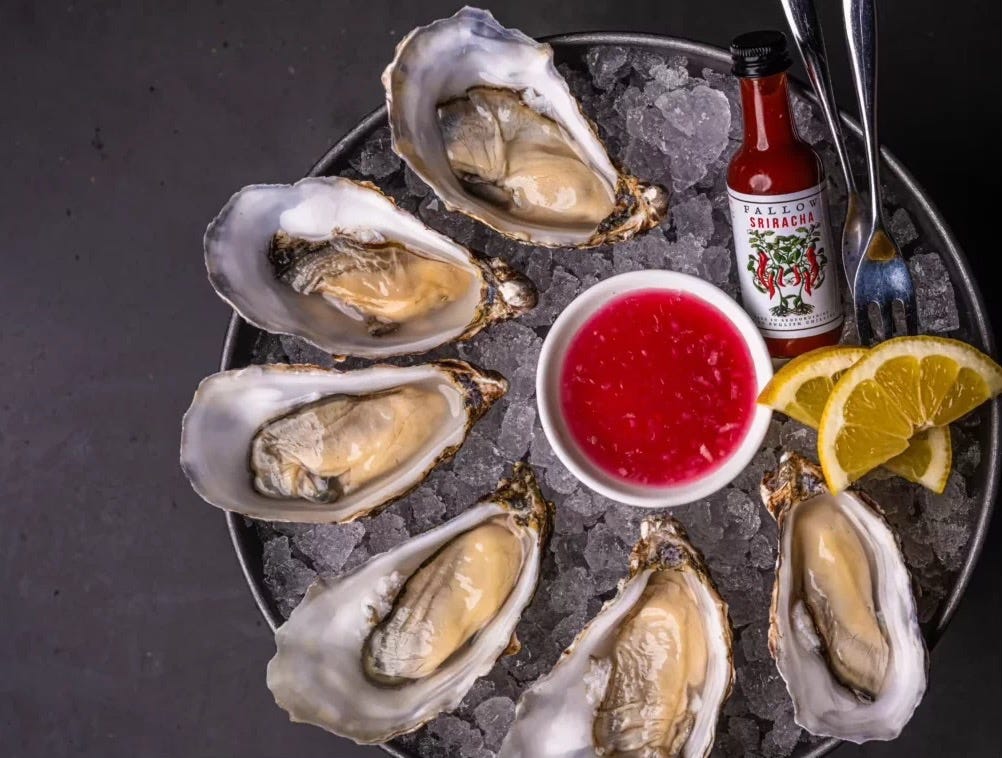
Deep fried oysters with an intense sriracha dipping sauce.
Fresh oysters with a spicy sriracha drizzle on top.
Spicy sriracha frozen margaritas.
It was a staple on our menu.
Though, if you’ve ever fermented something at home you’ll know, fermenting is absolutely no joke when it comes to smell. In the days of our first restaurant at Heddon street, we’d ferment it on the roof, purely because we had nowhere else to do it. Just these plastic buckets with fermenting chillies and garlic. And not only that but we’d save the chilli garlic pulp you’d get after you blitzed it, dry it out and mix it into our kombu seasoning (next level chilli twang). It was delicious but, as you can imagine, the stench of garlic was impressive. Thankfully, it was worth it.
Jack and I are of the firm belief that ego should be kept out of the kitchen. It is impossible to do everything if you are to do it well, and part of running a successful restaurant is knowing when to make the call on something that could be made in house, but actually doesn’t enhance the customer experience to do so versus buying in. One of the reasons why we decided to make our own sriracha instead of buying it in was because as gorgeous as Flying Goose is, it’s boiled. When sriracha is boiled, it ceases to be ‘alive’. The flavour changes a lot, losing some of that fresh vibrancy. Our ambition had been not to boil it in order to preserve that distinctive freshness. Unfortunately for us, we learned very fast why people boil products like this when Pierre Koffman came to dine with us on a particularly warm summer evening, sat down, picked up a bottle of our sriracha, and had the entire thing explode all over him. Not a proud moment for us.
When you ferment something, the natural sugars all breakdown and convert into lactobacillus (or ‘good’ bacteria). In our early small batches it was easy because we didn’t need to hold the product for a long period of time. But in these large batches, boiling it was essential in order to kill the bacteria and stop gasses from producing (and exploding). With a little tinkering, we figured out that we could still preserve that freshness and flavour by bringing it to the boil for a moment (a fact we wish we’d learned pre-Koffman) and then immediately chilling it down again. We’d then give it a second round of seasoning - tasting it until we couldn’t feel out mouths anymore - to give it that raw acidity. A step that was essential as every batch of chillies we got was slightly different, so we couldn’t just rely on a stock recipe. Thankfully - Pierre Koffman is a gentleman and has since happily returned to our restaurant.
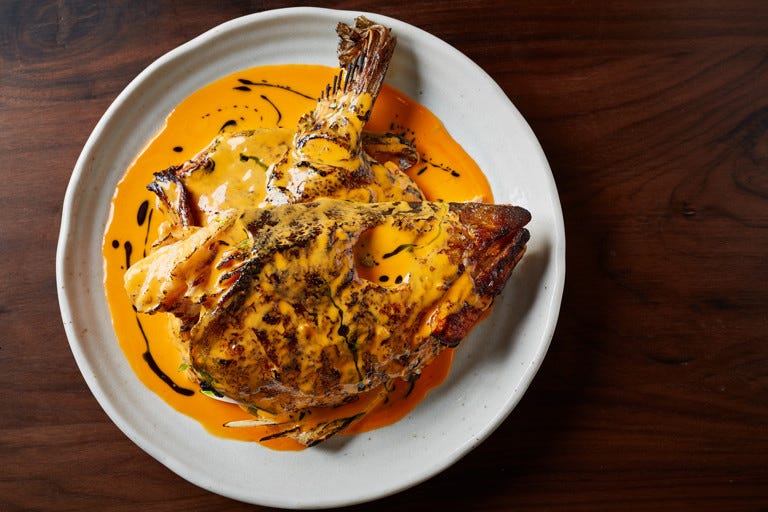
It was when we moved to St. James’ that things stepped up a gear. During lockdown we had a lovely regular who would cycle over to us for a burger and chips. He always, without fail, asked for extra sriracha to douse over his meal. And it came to a point that we decided we’d just do something nice and bottle it up for him. And once we gave him that bottle, it appeared he wasn’t the only one who wanted it. It wasn’t long before we decided to label it up and start producing it properly, even making an extra hot version which featured some beautiful Devon chillies. Eventually we were making so much of it (thanks mainly to its appearance in the cod head sauce we were going through litres and litres of the stuff) that we took the plunge and moved production off site.
The bottles are still proudly offered to every Fallow customer but there really is no satisfaction like making it yourself. Do yourself a favour, grab a jar and witness your obsession begin.

Keep reading with a 7-day free trial
Subscribe to Like a Chef to keep reading this post and get 7 days of free access to the full post archives.